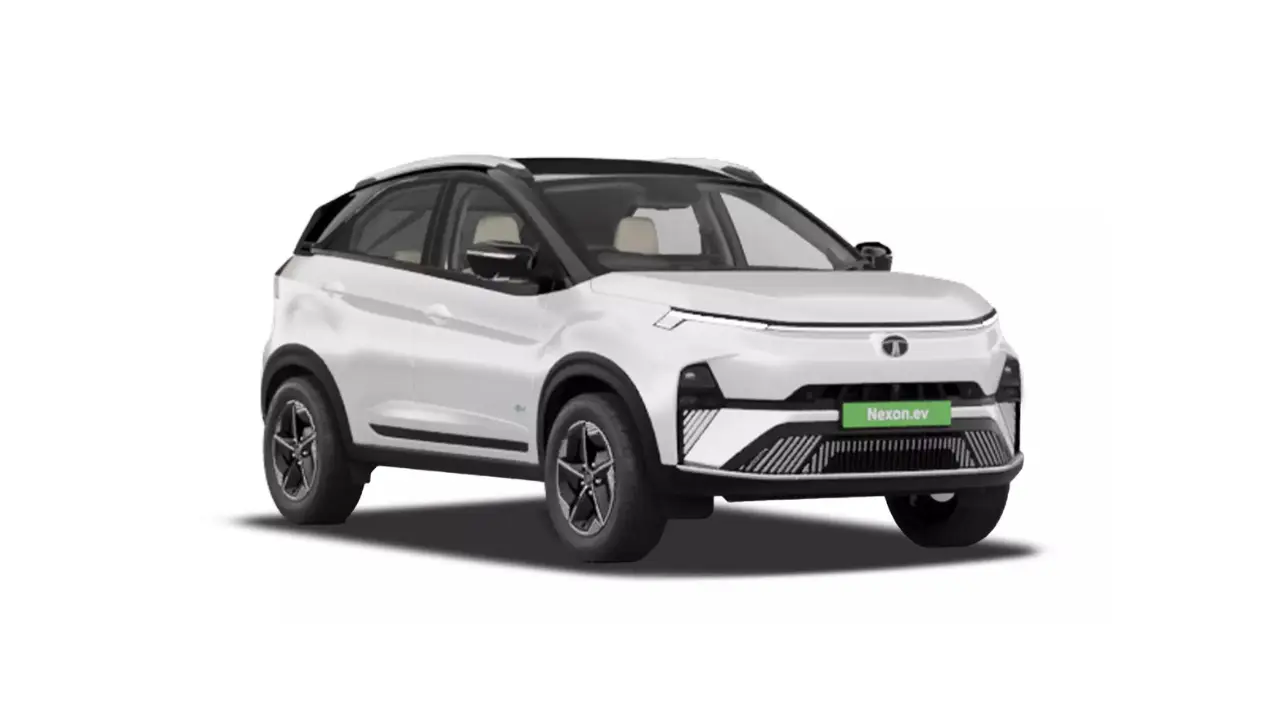
The 2026 Tata Nexon EV didn’t just start India’s electric revolution — it normalized it. From skeptical buyers to mass adoption, the Nexon EV has quietly become the default EV choice for Indian families, crossing a historic 1 lakh sales milestone, something no electric car in India has achieved before.
But Tata Motors isn’t done.
Internally codenamed “Project Garud”, the next-generation 2026 Tata Nexon EV—expected in late 2026 or early 2027—will be a ground-up transformation, not a mild refresh. A new platform, longer real-world range, sharper design, smarter tech, and wider ADAS adoption are all part of the plan.
So the big question is:
👉 Can the new Nexon EV finally replace petrol SUVs for most Indian buyers?
Let’s break it down.
2026 Tata Nexon EV: What’s Really Changing?
Unlike previous updates that focused on batteries and features, the 2026 Nexon EV will undergo three fundamental shifts:
- New EV-first platform
- Major design overhaul
- EV experience focused on real-world usability
This marks Tata’s transition from “early EV adopter” to mature EV manufacturer.
New Platform: Goodbye X1, Hello ARGOS / Acti.EV
The current Nexon EV still uses a heavily modified X1 platform, originally designed for petrol and diesel cars. While Tata has done a commendable job with it, the platform has reached its limits.
What’s New for 2026
- Likely shift to ARGOS / Acti.EV architecture
- Dedicated EV skateboard layout
- Better battery packaging
- Improved cabin space
- Lower center of gravity
This is the same philosophy Tata is adopting for Curvv EV, Sierra EV, and Avinya, bringing consistency across its EV lineup.
Battery, Range & Charging: Solving the “Real-World Range” Problem
Range anxiety is still the biggest mental barrier for EV buyers — and Tata knows it.
Expected Battery Improvements
- Current 45 kWh pack continues
- Improved energy density
- Smarter thermal management
- More efficient motor tuning
Range Expectations
- ARAI: 500+ km
- Real-world: 430–480 km (expected)
That’s dangerously close to what many petrol SUVs offer on a full tank — without fuel costs.
Charging Enhancements
- Faster DC charging (10–80% in under 60 minutes)
- Smarter battery pre-conditioning
- Wider fast-charging compatibility
- OTA charging optimizations
For daily users, this means less planning, more confidence.
Design Overhaul: Inspired by Curvv & Sierra EV
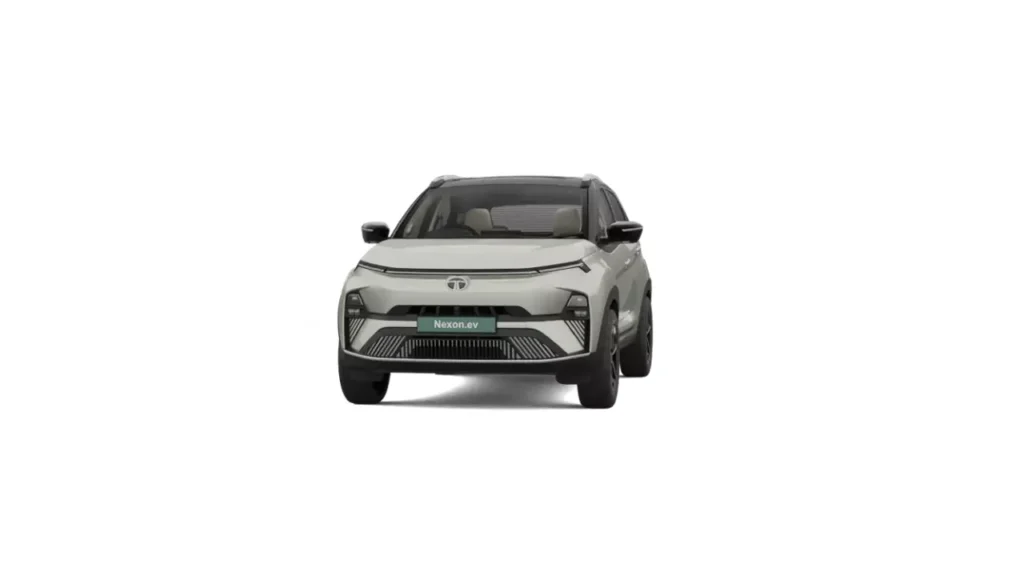
The Nexon EV 2026 won’t just feel new — it will look completely different.
Exterior Design Direction
- Sleeker coupe-inspired silhouette
- Connected LED light bars (front & rear)
- Sharper, futuristic surfacing
- Aerodynamic alloy wheels (16-inch)
- Cleaner EV-specific styling
This design evolution is meant to:
- Improve efficiency
- Differentiate it from ICE Nexon
- Appeal to younger, tech-savvy buyers
Expect the Nexon EV to finally look like a born-electric SUV, not a converted one.
Interior & Cabin: A Big Step Up in Premium Feel
The current Nexon EV is feature-rich, but the cabin still feels familiar. The 2026 version aims to change that perception completely.
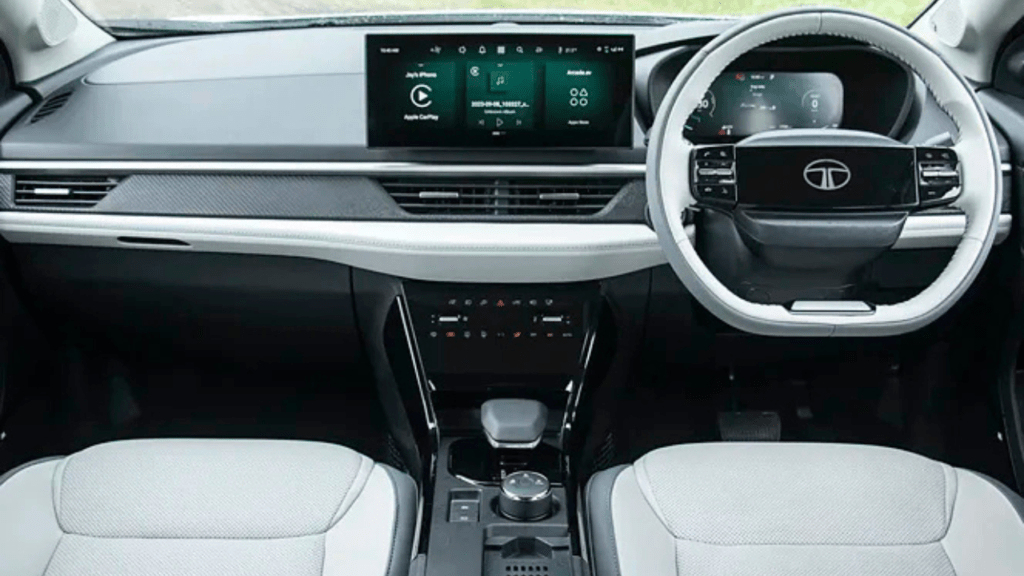
Expected Cabin Upgrades
- 12.3-inch touchscreen infotainment
- 10.25-inch digital driver display
- Panoramic sunroof (larger than current)
- Premium upholstery & soft-touch materials
- Minimalist dashboard layout
Tech & Convenience
- Digital key
- Wireless Android Auto & Apple CarPlay
- Improved voice commands
- More intuitive UI/UX
The focus is simple:
- Make EV ownership feel premium, not experimental.
ADAS & Safety: From Optional to Expected
Tata has already introduced Level 2 ADAS on top trims of the current Nexon EV. In 2026, ADAS will no longer be a novelty.
Expected ADAS Expansion
- Adaptive cruise control
- Lane keep assist
- Autonomous emergency braking
- Blind spot monitoring
- Forward collision warning
Safety Credentials
- Likely 5-star Bharat NCAP
- 6+ airbags standard on higher trims
- ESC, traction control, 360° camera
For a family EV, this positions the Nexon EV as one of the safest compact SUVs in India—electric or not.
Smart Tech & Software: EVs Are Becoming Smartphones
The 2026 Nexon EV will lean heavily into software-defined vehicle features.
Smart Additions Expected
- Over-the-air (OTA) updates
- Battery health analytics
- Predictive maintenance alerts
- Remote charging & climate control
- Improved Tata EV app integration
This is crucial because modern EV buyers expect their cars to improve over time, not age.
Sales Milestone: Why Tata Can’t Afford to Fail
The Nexon EV recently crossed 1,00,000 units sold, a massive achievement in a still-nascent EV market.
Why This Matters
- Proven trust in Tata EVs
- Strong charging ecosystem growth
- High resale confidence
- Familiarity among service networks
This gives Tata a massive advantage over newer EV brands trying to build credibility.
Expected Launch Timeline & Positioning
Launch Window
- Q4 2026 – Early 2027
Expected Pricing
- Likely between ₹15 lakh – ₹20 lakh (ex-showroom)
Tata will likely:
- Continue multiple variants
- Offer both long-range & feature-focused trims
- Position it above Tiago EV & Punch EV, below Curvv EV
Who Should Wait for the 2026 Nexon EV?
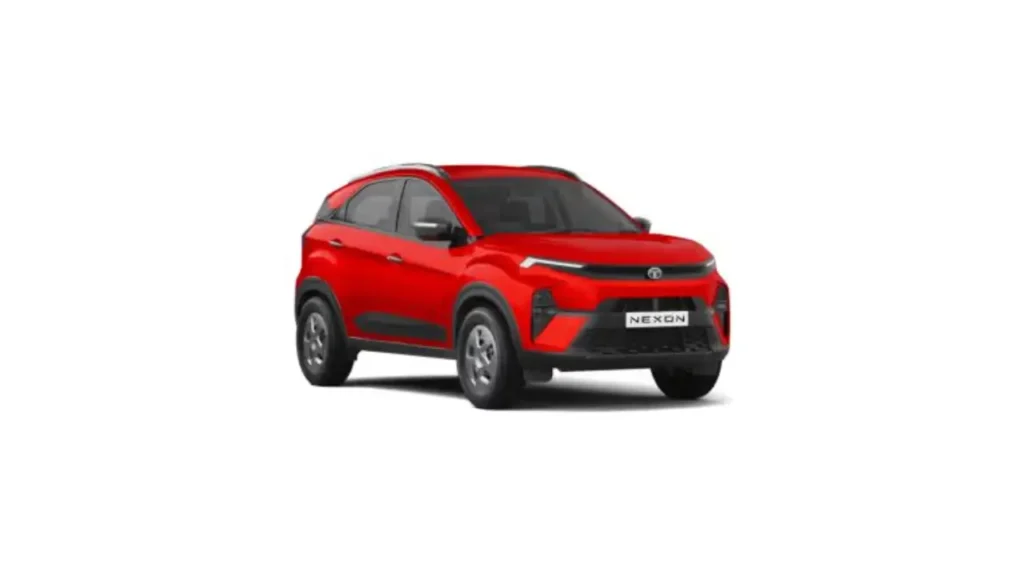
Wait If You:
- Want long real-world EV range
- Prefer advanced safety & ADAS
- Plan to keep the car for 5–8 years
- Want future-ready EV tech
Buy Current Nexon EV If You:
- Need an EV immediately
- Get good year-end discounts
- Drive mostly in the city
Final Verdict: The Nexon EV Is Growing Up
The 2026 Tata Nexon EV won’t just be an upgrade — it will be a statement.
With:
- A new EV-first platform
- Real-world usable range
- Smarter software
- Better design
- Strong safety focus
This could be the moment when petrol compact SUVs start losing relevance for urban India.
The Nexon EV isn’t just evolving — it’s preparing to dominate the next phase of India’s EV journey.
Also Read:
- Mahindra BE.07 & XUV.e4 Electric SUV Review: Can Mahindra Dominate India’s EV Market by 2026?
- Maruti Suzuki WagonR Electric Car Review: Can India’s Most Trusted Hatchback Go Electric Successfully in 2026?
- Maruti Suzuki e Vitara Electric SUV in Review: Can India’s Favourite Name Win the Love in EV Game in 2026?