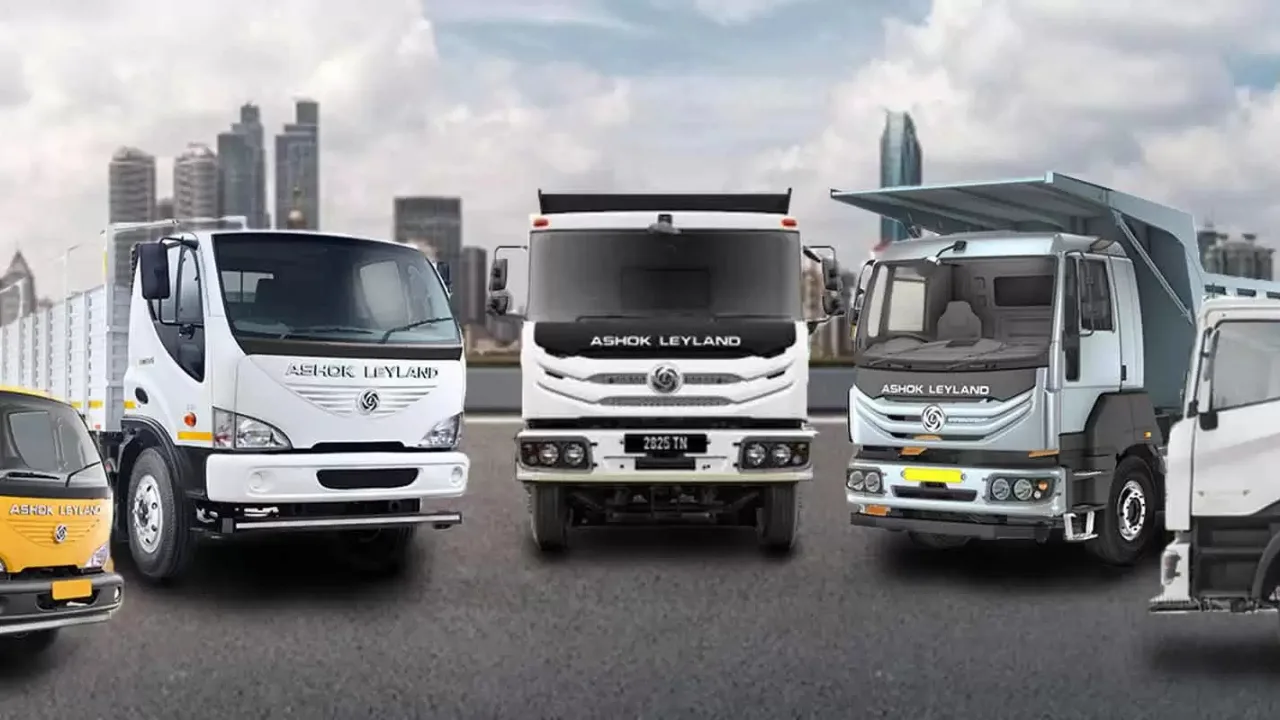
Ashok Leyland December 2025 Sales Surge: 27% Growth Shows India’s Truck and Bus Demand Is Roaring Back
India’s commercial vehicle industry ended 2025 with a powerful signal of recovery — and one company stood clearly at the center of it.
Ashok Leyland delivered a remarkable performance in December 2025, posting strong growth across trucks, buses, and light commercial vehicles.
While many automotive companies typically face year-end slowdowns, Ashok Leyland did the opposite.
The company closed the month with 21,533 total vehicle sales, representing 27% year-on-year growth compared to December 2024.
Even more impressive, sales momentum accelerated compared to November, indicating improving demand across the logistics, infrastructure, and passenger transport sectors.
But the headline number only tells part of the story.
Behind this strong performance lies a multi-segment recovery in India’s commercial vehicle market, driven by freight demand, infrastructure expansion, and growing transportation needs.
Let’s break down what really powered Ashok Leyland’s strong December performance.
Ashok Leyland December 2025 Sales Overview
The December results clearly highlight the company’s upward momentum.
Sales Snapshot
| Category | December 2025 | December 2024 | YoY Growth |
|---|---|---|---|
| Total Vehicle Sales | 21,533 | 16,964 | +27% |
| Domestic Sales | 19,855 | 15,713 | +26% |
| Exports | 1,678 | 1,251 | +34% |
The numbers confirm that both domestic demand and exports contributed to the company’s growth.
Domestic demand remained the biggest driver, but exports also played an important role in expanding the company’s global footprint.
Month-on-Month Momentum Signals Rising Demand
Commercial vehicle sales often fluctuate due to seasonal factors such as year-end budgeting and fleet replacement cycles.
However, Ashok Leyland’s December performance showed clear month-to-month acceleration.
Monthly Sales Comparison
| Month | Total Sales |
|---|---|
| November 2025 | 18,272 units |
| December 2025 | 21,533 units |
That represents a growth of more than 3,200 vehicles in just one month.
This kind of increase suggests that:
- Freight demand is improving
- Infrastructure projects are accelerating
- Fleet operators are expanding vehicle capacity
In the commercial vehicle industry, such momentum often indicates stronger economic activity ahead.
Segment-Wise December 2025 Performance
One of the biggest reasons behind Ashok Leyland’s strong month was balanced growth across multiple vehicle segments.
Segment-Wise Sales Performance
| Segment | December 2025 Sales | YoY Growth |
|---|---|---|
| M&HCV Trucks | 11,387 | +27% |
| M&HCV Buses | 2,166 | +44% |
| LCV (Domestic) | 6,302 | +21% |
| LCV (Including Exports) | 6,703 | +22% |
This distribution shows that the company is not dependent on a single vehicle category.
Instead, it benefits from diversified demand across trucks, buses, and light commercial vehicles.
M&HCV Trucks: The Backbone of the Recovery
The Medium and Heavy Commercial Vehicle (M&HCV) truck segment played the biggest role in the company’s December growth.
Key Truck Sales Data
- Domestic M&HCV trucks: 11,387 units
- Year-on-year growth: 27%
- November 2025 comparison: 8,576 units
This massive jump reflects improving activity across several sectors:
1. Freight Movement
India’s logistics industry saw a noticeable increase in freight demand during the final quarter of 2025.
As manufacturing and e-commerce shipments increased, transport companies expanded their fleets to keep up with delivery volumes.
2. Infrastructure Development
Government infrastructure spending continues to support demand for heavy trucks used in construction, mining, and road development.
Projects such as:
- Highway expansions
- Industrial corridor development
- Urban infrastructure upgrades
all require heavy transport vehicles.
3. Fleet Replacement Cycles
Many fleet operators delayed vehicle purchases during earlier economic uncertainty.
As market confidence improves, companies are replacing older trucks with newer, more efficient models.
For Ashok Leyland, this replacement demand translated into strong truck sales.
Bus Segment Delivers the Biggest Growth Surprise
While trucks contributed the largest volume, the bus segment delivered the fastest growth.
Domestic Bus Sales
| Category | Sales |
|---|---|
| December 2025 | 2,166 units |
| December 2024 | 1,509 units |
| Growth | +44% |
Even compared to November’s already strong performance (1,662 units), December showed another sharp jump.
This surge reflects improving demand across several passenger transport segments.
Why Bus Demand Is Rising Again
Several trends are driving the revival of the bus market.
1. Government Transport Investments
State governments across India have begun modernizing public transport fleets.
Large orders for city buses and intercity coaches have boosted demand for manufacturers.
2. Corporate Staff Transportation
As offices reopen and hybrid work stabilizes, companies are expanding employee transportation services.
This has increased demand for staff buses and shuttle vehicles.
3. Intercity Travel Recovery
Passenger travel between cities has gradually rebounded.
Tourism, pilgrimage travel, and regional transport networks are contributing to stronger bus demand.
For Ashok Leyland, this revival is particularly important because buses traditionally offer strong margins and long-term fleet relationships.
Export Markets Strengthen Ashok Leyland’s Position
Exports also contributed to the company’s December performance.
M&HCV Sales Including Exports
| Category | Sales | YoY Growth |
|---|---|---|
| Total M&HCV | 14,830 | +29% |
| Trucks | 11,596 | +26% |
| Buses | 3,234 | +45% |
This highlights the growing international demand for Ashok Leyland’s commercial vehicles.
The company has built a strong presence in several regions, including:
- Middle East
- Africa
- South Asia
- Latin America
These markets rely heavily on durable trucks and buses designed for tough operating conditions, an area where Ashok Leyland has strong expertise.
Light Commercial Vehicles Remain Stable Growth Engine
The Light Commercial Vehicle (LCV) segment continues to provide steady growth for the company.
LCV Performance
| Category | Sales | Growth |
|---|---|---|
| Domestic LCV | 6,302 | +21% |
| Total LCV (Including Exports) | 6,703 | +22% |
LCVs play a crucial role in urban logistics and last-mile delivery.
Demand is driven by:
- E-commerce deliveries
- Small business transport
- Urban freight movement
Although growth in this segment is slower than trucks and buses, it remains stable and predictable, providing a reliable revenue stream.
Nine-Month FY2026 Performance Shows Consistency
December’s performance becomes even more impressive when viewed within the broader financial year.
April–December 2025 Sales
| Category | Sales | Growth |
|---|---|---|
| Domestic Sales | 1,38,219 | +10% |
| Total Sales (Including Exports) | 1,50,979 | +11% |
Segment Breakdown
| Segment | Sales | Growth |
|---|---|---|
| M&HCV Domestic | 85,698 | +9% |
| LCV Domestic | 52,521 | +11% |
These numbers show that Ashok Leyland’s growth is not dependent on a single strong month.
Instead, it reflects steady demand across the entire year.
Why Ashok Leyland’s Growth Matters for India’s Economy
Commercial vehicle demand is often considered a leading indicator of economic activity.
When truck and bus sales rise, it usually signals:
- Increasing goods movement
- Expanding infrastructure activity
- Higher business investment
Ashok Leyland’s strong performance therefore suggests improving economic momentum heading into 2026.
Key Drivers Behind Ashok Leyland’s Success
Several strategic factors helped the company deliver strong results.
1. Strong Product Portfolio
Ashok Leyland offers a wide range of vehicles across:
- Heavy trucks
- Construction vehicles
- Intercity buses
- Light commercial vehicles
This diversity helps the company capture demand across multiple industries.
2. Expanding Dealer Network
A growing service and dealer network improves fleet operator confidence, especially in rural and semi-urban markets.
3. Focus on Fleet Efficiency
Modern trucks with better fuel efficiency and reliability make it easier for logistics companies to reduce operating costs.
4. Growing Export Presence
Exports provide a diversified revenue stream, reducing dependence on domestic demand cycles.
What Could Drive Growth in 2026
Several macroeconomic trends could support Ashok Leyland’s growth in the coming year.
Infrastructure Expansion
Large infrastructure projects across India will continue to require heavy transport vehicles.
Logistics Industry Growth
The rapid expansion of e-commerce and supply chains is increasing demand for commercial vehicles.
Public Transport Modernization
Government initiatives aimed at improving urban transport systems will likely boost bus demand.
Fleet Modernization
Older commercial vehicles are gradually being replaced with newer, more efficient models.
My Thoughts:
Looking towards a Ashok Leyland December Sales, I can say that the demand for commercial vehicles are increasing. People are more inclined to the development of the infrastructure, passenger transport as well as goods and raw material transport for their profits. This showcases strong economic growth for our nation’s future as well as investors who invested in the shares of the Ashok Leyland.
Key Facts About Ashok Leyland
| Fact | Details |
|---|---|
| Founded | 1948 |
| Founder | Raghunandan Saran |
| Headquarters | Chennai, Tamil Nadu, India |
| Parent Group | Hinduja Group |
| Industry | Commercial Vehicles & Automotive |
| Global Presence | Operations in 50+ countries |
| Manufacturing Plants | 9 plants globally |
| Employees | 11,000+ employees |
| Products | Trucks, Buses, Defence Vehicles, Engines |
| Market Position | 2nd Largest Commercial Vehicle Manufacturer in India |
| Global Rank | Among the world’s top bus and truck manufacturers |
| Revenue | Over ₹38,000 crore annual revenue (FY2024-25 approx.) |
Ashok Leyland is the flagship company of the Hinduja Group and one of India’s most important commercial vehicle manufacturers. The company produces trucks, buses, defense vehicles and engines used across logistics, public transport, construction, and military applications.
Today, Ashok Leyland operates manufacturing facilities across India and overseas, including locations such as Ras Al Khaimah in the UAE and Leeds in the United Kingdom.
The company is also recognized globally as the second-largest commercial vehicle manufacturer in India and one of the largest bus manufacturers in the world, serving markets across Asia, Africa, the Middle East, and Europe.
Final Verdict: A Powerful Finish to 2025
Ashok Leyland’s December 2025 sales surge was more than just a strong month.
It reflected broader recovery trends across India’s commercial vehicle industry.
With:
- 27% overall growth
- Strong truck demand
- Explosive bus segment growth
- Stable LCV performance
- Expanding export markets
the company has entered 2026 with significant momentum.
If infrastructure investment, logistics expansion, and transport demand continue rising, Ashok Leyland could be heading toward one of its strongest growth cycles in years.
For fleet operators, investors, and industry observers alike, December’s performance sends a clear message:
India’s commercial vehicle engine is revving up again.
For Enquiry:
Also Read: