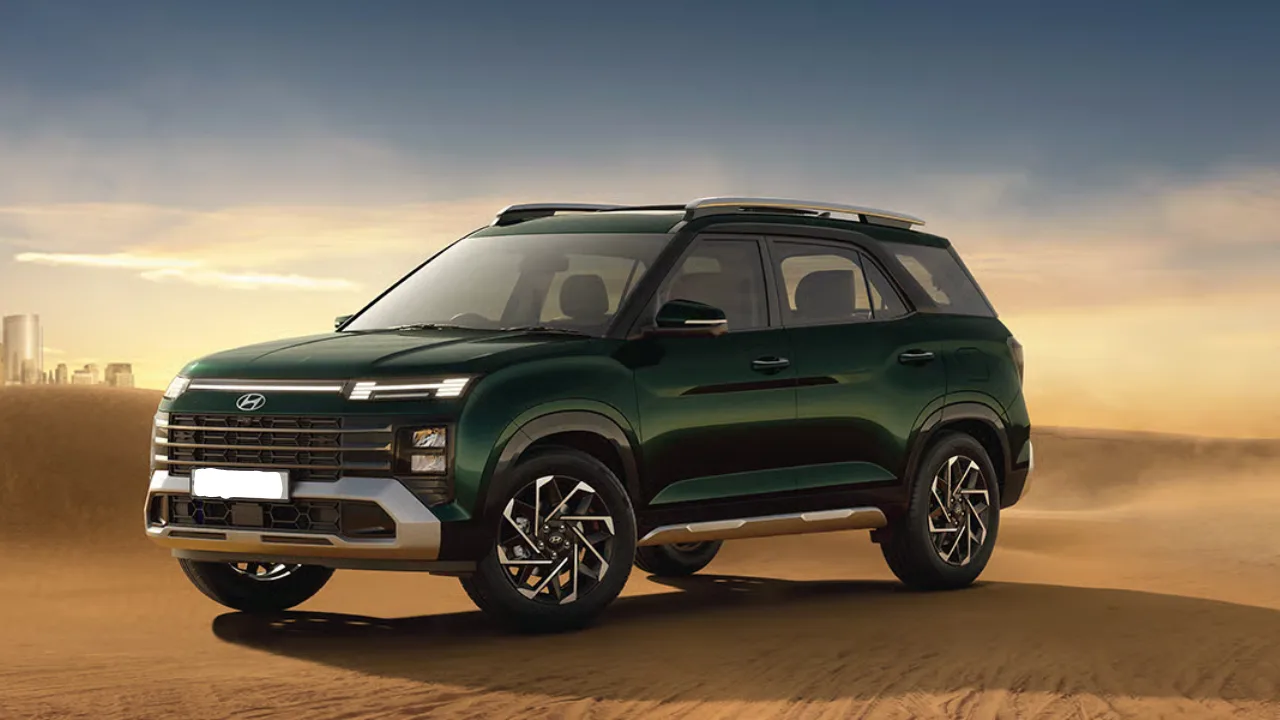
At first glance, the December 2025 sales report from Hyundai Motor India appears encouraging.
The company reported 58,702 total units sold, representing a 6.6% year-on-year growth compared to December 2024.
For most automakers, this kind of growth would be considered a strong finish to the year.
But when analysts and investors looked beyond the headline numbers, the story started to change.
A closer look reveals flat domestic growth, heavy reliance on exports, and a noticeable month-on-month slowdown that has raised concerns about Hyundai’s momentum entering 2026.
So while the official numbers suggest progress, the deeper analysis shows a more complex picture for one of India’s most influential car manufacturers.
Let’s break down what really happened in Hyundai’s December 2025 sales performance.
Hyundai December 2025 Sales Overview
Here are the key numbers reported by Hyundai:
Total Sales:
58,702 units
Year-on-Year Growth:
+6.6% (December 2024: 55,078 units)
At a glance, this looks like healthy growth.
However, the real story emerges when we divide the numbers into domestic sales and exports, which show two very different trends.
Domestic Sales Growth Is Almost Flat
Hyundai sold 42,416 vehicles in the Indian market in December 2025.
That represents just 0.5% year-on-year growth.
For a brand that consistently ranks among the top two car manufacturers in India, this is an unusually slow expansion.
Flat domestic demand suggests several possible developments:
- Urban markets may be approaching saturation
- Buyers are shifting toward new competitors
- Consumers may be delaying purchases due to economic uncertainty
The Indian automotive market has also been experiencing a gradual shift toward SUV dominance, forcing manufacturers to continuously refresh their lineups to maintain demand.
While Hyundai still has strong products, this near-stagnant domestic growth indicates that maintaining leadership is becoming harder.
Export Performance Saved the Headline Numbers
If domestic sales were slow, Hyundai’s export business delivered the real boost.
The company exported 16,286 units in December 2025.
This represents a massive 26.5% year-on-year increase.
Exports now play a critical role in Hyundai’s strategy, as India continues to function as a global manufacturing hub for the company.
Vehicles produced in India are shipped to markets across:
- Latin America
- Africa
- Middle East
- Southeast Asia
This global strategy helps Hyundai stabilize production volumes even when the domestic market slows.
However, relying heavily on exports also introduces risk.
If global demand weakens or international markets slow down, Hyundai’s total sales numbers could quickly feel the impact.
Month-on-Month Sales Drop Raises Eyebrows
The biggest concern for analysts is the sharp drop compared to the previous month.
In November 2025, Hyundai sold:
66,840 units
In December 2025, sales fell to:
58,702 units
That represents a 13.9% decline in just one month.
Some seasonal slowdown is normal toward the end of the year, but the magnitude of this drop has made investors cautious.
Month-to-month comparisons often provide a better picture of market momentum, and the December numbers suggest Hyundai may be entering 2026 with slightly weaker demand.
Hyundai’s Biggest Strength: SUV Leadership
Despite these concerns, Hyundai still holds a strong position in India thanks to its SUV lineup.
SUVs continue to dominate the Indian automotive market, and Hyundai has invested heavily in this segment.
The biggest success story remains the Hyundai Creta, which continues to be one of the best-selling SUVs in the country.
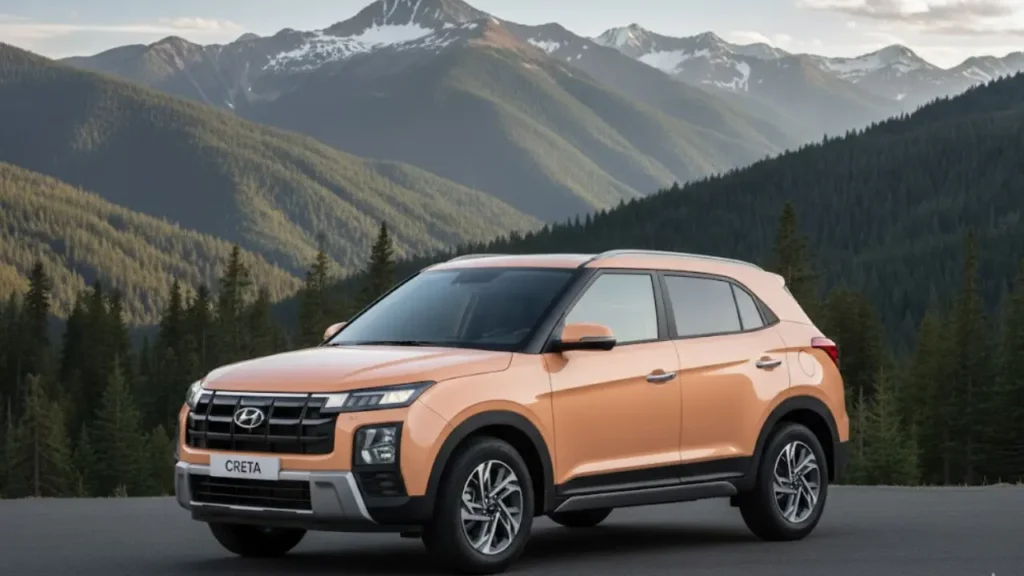
In calendar year 2025, the Creta achieved an impressive milestone:
Over 200,000 units sold
That translates to roughly 550 vehicles sold every single day.
Few cars in India maintain this level of consistent demand year after year.
The Creta’s combination of:
- Premium design
- Strong engine options
- Modern features
- Strong resale value
has made it one of Hyundai’s most reliable revenue drivers.
In many ways, the Creta is not just a successful product — it has become the pillar of Hyundai’s domestic business.
New Hyundai Venue Also Shows Strong Momentum
Another key contributor to Hyundai’s performance is the Hyundai Venue.
The updated Venue has generated strong demand since its launch.
Within just two months, Hyundai recorded:
More than 55,000 bookings
This demonstrates the continued popularity of compact SUVs in India, particularly among younger buyers and urban customers.
Compact SUVs offer:
- SUV styling
- Better road presence
- Higher ground clearance
- Practical city driving
These characteristics make them extremely attractive for Indian consumers transitioning from hatchbacks.
Hyundai has clearly understood this trend and continues to focus heavily on SUV development.
Hyundai’s Official Explanation for the Sales Numbers
According to Tarun Garg, Managing Director and CEO of Hyundai Motor India, several factors influenced the December sales performance.
The company pointed to:
Improving market sentiment due to potential GST reforms
and
strong export demand from international markets
These factors align with Hyundai’s long-term strategy of strengthening its role as a global production hub.
Hyundai frequently describes this strategy as:
“Made in India, Made for the World.”
This philosophy reflects the company’s ambition to use India not only as a domestic market but also as a major export base.
Inventory Management Signals a Careful Approach
Another interesting detail in Hyundai’s sales report is its inventory strategy.
The company stated that it ended 2025 with:
optimized dealer inventory levels
This means Hyundai is maintaining tight control over unsold vehicles in dealerships.
While this helps reduce financial pressure on dealers, it also suggests the company is not expecting explosive domestic demand immediately.
Maintaining balanced inventory allows Hyundai to:
- Avoid excess stock
- Protect dealer profitability
- Adjust production quickly if demand changes
This strategy indicates a cautious but disciplined approach heading into 2026.
Stock Market Reaction: Investors Show Concern
Even though Hyundai posted year-on-year growth, the stock market reaction was surprisingly negative.
On January 2, 2026, Hyundai’s share price declined by approximately 2–4%.
The stock traded in the range of:
₹2,264 to ₹2,278
Why did investors react negatively?
The primary reason was disappointment with domestic sales growth, which analysts believe is a more important indicator of long-term performance.
When domestic demand slows, investors often worry about:
- future revenue growth
- market share pressure
- rising competition
Even a strong export performance cannot completely offset these concerns in the eyes of financial markets.
Upcoming Launches Could Change the Story
Hyundai is already preparing several updates to maintain momentum in 2026.
One of the most anticipated launches is the facelift of the Hyundai Verna.
The updated Verna is expected to arrive in the first half of 2026, bringing:
- refreshed styling
- additional technology features
- improved comfort and safety upgrades
Hyundai hopes that these updates will strengthen its position in the sedan segment, which has faced intense competition from SUVs in recent years.
Price Hike Could Impact Demand
Another important development is Hyundai’s price increase announced from January 1, 2026.
The company implemented an average price hike of approximately 0.6% across several models.
Hyundai cited rising input costs and commodity prices as the primary reason behind the increase.
Although the hike may appear small, even modest price adjustments can affect price-sensitive buyers in India.
If inflation continues to impact consumer spending, manufacturers may need to carefully balance pricing and demand.
Competition Is Getting Stronger
Hyundai also faces increasing competition from multiple manufacturers in India.
Key rivals include:
- Maruti Suzuki
- Tata Motors
- Mahindra & Mahindra
These companies have aggressively expanded their SUV portfolios, making the market more competitive than ever.
For example:
- Tata Motors has gained attention with strong safety ratings and EV growth
- Mahindra has achieved massive demand for models like the Scorpio-N and XUV700
- Maruti Suzuki continues to dominate the mass-market segment
As a result, Hyundai must continuously innovate to maintain its position among the top brands.
What This Means for Hyundai in 2026
The December 2025 sales report does not indicate a crisis for Hyundai.
However, it does highlight important signals about the market’s direction.
The company’s strengths remain clear:
- Strong global export network
- Popular SUV lineup
- Loyal customer base in India
At the same time, there are emerging challenges:
- Slower domestic growth
- Increasing competition
- Investor caution in financial markets
How Hyundai responds to these signals will determine whether the company accelerates again or enters a phase of steady but slower expansion.
My Thoughts:
In december 2025 for Hyundai Motor India the sales has risen, but looking towards a overall domestic demand sales has been decreased. Hyundai Creta played a big role in increase of december 2025 sales. Now, we can get Hyundai Creta fully electric denoting its dominance, features and technology in this modern era. Recently I have driven Hyundai Creta car my driving experience was good and the car generates enough power when we try to overtake other cars. So yes Creta is best Mid-Size SUV.
Final Analysis: Strong Brand, But Watch the Trends
Hyundai remains one of the most influential automotive companies in India, and its brand strength is still very strong.
The December 2025 numbers show that the company is far from struggling.
However, they also reveal that headline growth can sometimes hide deeper market shifts.
Exports are booming.
SUV demand remains strong.
But domestic sales growth is clearly slowing.
For Hyundai, the real challenge in 2026 will be reigniting domestic demand while maintaining its global export momentum.
If upcoming launches succeed and the SUV strategy continues to perform, Hyundai could quickly regain stronger growth.
But if domestic demand remains flat, the company may need to rethink its strategy to stay ahead in India’s rapidly evolving car market.
If you love Hyundai vehicles and want to purchase one of the car then visit Hyundai Motors with all Car Varients.
Also Read: