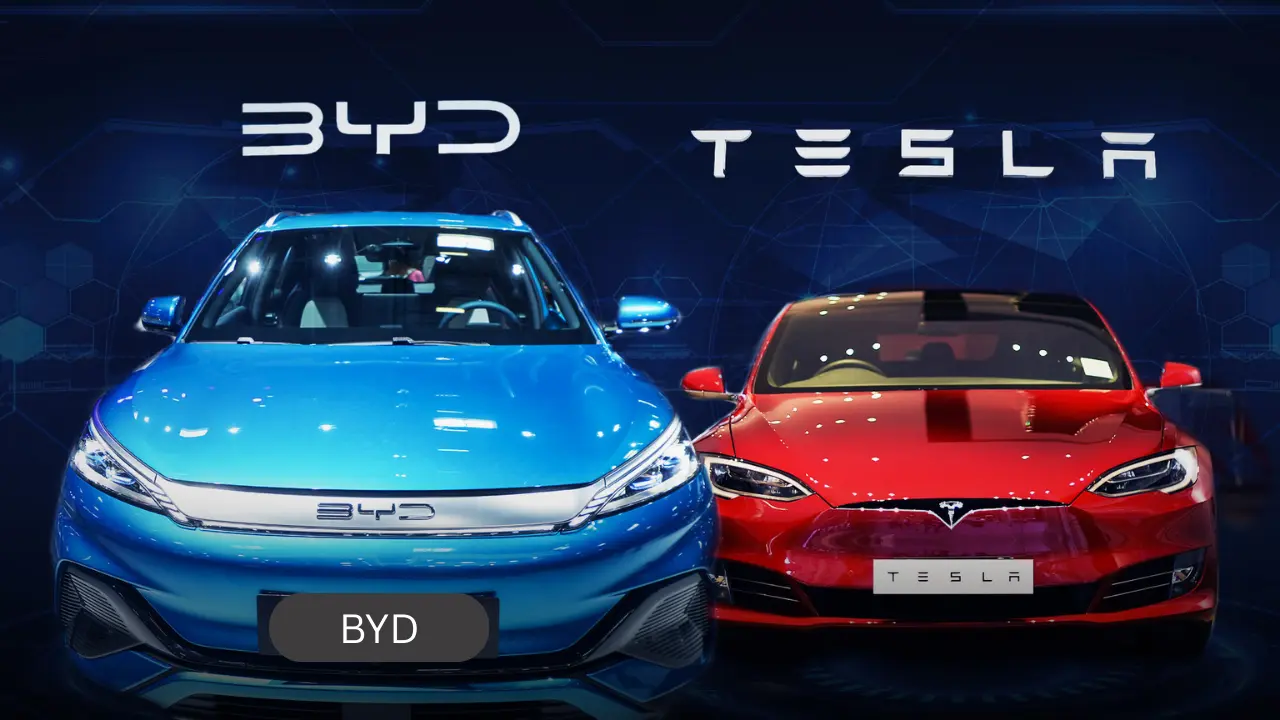
For over a decade, one name defined the global electric vehicle revolution: Tesla.
It wasn’t just a car brand.
It was the benchmark. The disruptor. The symbol of the future.
But 2025 changed everything.
In a development few Western markets fully anticipated, BYD officially overtook Tesla to become the world’s largest seller of fully electric vehicles (BEVs).
This wasn’t a narrow win.
It wasn’t a temporary quarterly spike.
And it wasn’t fueled by subsidies alone.
It was a structural shift in global automotive power.
And the consequences will shape the EV market for years to come.
The 2025 EV Sales Numbers That Redefined the Leaderboard
Let’s begin with verified full-year global sales data for battery electric vehicles (BEVs):
Full-Year 2025 BEV Sales
- BYD: 2.26 million EVs sold
+28% year-on-year growth - Tesla: 1.64 million vehicles delivered
–8.6% decline compared to 2024
This is significant for two reasons:
- Tesla didn’t just grow slower — it shrank.
- BYD widened the gap while expanding aggressively overseas.
For the first time in modern EV history, Tesla is not the volume leader.
When You Include Hybrids, the Gap Becomes Massive
China’s market operates differently from the U.S. and Europe. It classifies vehicles under the broader category of New Energy Vehicles (NEVs), which includes:
- Battery Electric Vehicles (BEVs)
- Plug-in Hybrid Electric Vehicles (PHEVs)
When we include this wider category:
- BYD Total NEV Sales in 2025:
Approximately 4.6 million vehicles
Tesla does not compete in plug-in hybrids at all.
This means BYD’s scale advantage is not incremental — it’s structural.
Why BYD Is Winning: Strategy Over Hype
This shift didn’t happen overnight. It was built on three strategic pillars.
1. Product Diversity: Options Beat Exclusivity
Tesla’s lineup remains relatively narrow:
- Model S
- Model 3
- Model X
- Model Y
- Cybertruck (limited markets)
While these vehicles remain competitive, many buyers now view them as familiar rather than fresh.
BYD, on the other hand, offers a deep portfolio across price points and body styles.
Popular BYD Models Driving Growth:
- BYD Dolphin – Affordable urban EV
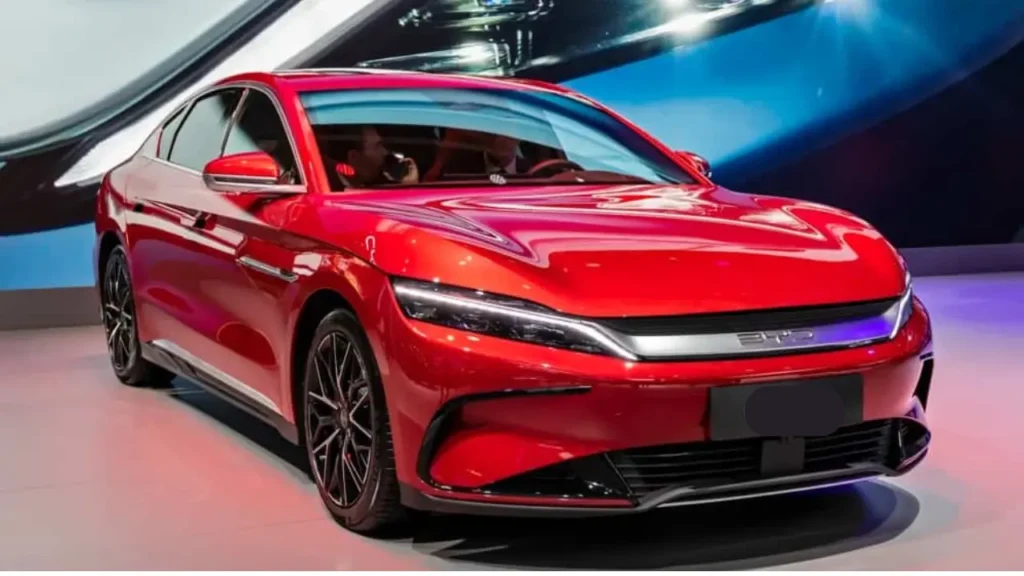
- BYD Seal – Direct competitor to Tesla Model 3
- BYD Atto 3 – Global compact SUV
BYD sells:
- Entry-level city EVs
- Mid-range family sedans
- Premium electric SUVs
- Plug-in hybrids for transitional buyers
Tesla sells aspiration.
BYD sells access.
And in 2025, access wins volume.
2. Aggressive Global Expansion
While Tesla focused heavily on North America and China, BYD launched a calculated export surge.
2025 Export Performance:
- Exports grew by over 150%
- More than 1 million vehicles shipped internationally
BYD gained traction in:
- Europe
- Southeast Asia
- Latin America
- Middle East
Even after facing EU tariffs of roughly 17%, BYD vehicles often remained cheaper than Tesla’s entry offerings.
This pricing flexibility comes from cost control — not discounting desperation.
3. Vertical Integration: BYD Builds What Tesla Buys
This is perhaps the most critical factor.
BYD is not just a car company.
It is also:
- A battery manufacturer
- A semiconductor producer
- A component supplier
- A vehicle assembler
Its proprietary Blade Battery technology reduces reliance on external suppliers and lowers cost per kWh.
Tesla, despite Gigafactories, still sources batteries from partners like Panasonic, LG, and CATL in many regions.
The difference?
BYD controls more of its supply chain.
In an industry where battery cost determines profitability, that control is powerful.
Tesla’s 2025: Not Collapse — But Erosion
Tesla didn’t implode.
But it experienced silent damage.
Key Challenges in 2025:
- U.S. federal tax credit eligibility tightened
- EV affordability pressures increased
- Slowing growth in core markets
- Brand controversies surrounding CEO Elon Musk
- No major mass-market product launch
Tesla relied heavily on price cuts to stimulate demand.
Price cuts protect volume in the short term — but compress margins.
BYD, with lower structural costs, didn’t need dramatic discounting.
Investor Reaction: Calm, But Cautious
When 2025 global data became public in early January 2026:
- BYD shares saw a noticeable uptick
- Tesla stock dipped modestly but did not crash
Why?
Because Tesla is no longer valued purely as a car company.
It is priced as a technology and AI company.
Tesla’s Strategic Pivot: Beyond Cars
Tesla’s future narrative increasingly emphasizes:
- Full Self-Driving (FSD)
- AI software subscriptions
- Robotaxi networks
- Optimus humanoid robots
Tesla’s valuation depends on future breakthroughs.
BYD’s valuation depends on present execution.
One is selling tomorrow.
The other is dominating today.
Manufacturing Scale vs Brand Power
The EV war has evolved.
It is no longer:
“Who builds the coolest car?”
It is:
- Who builds the most efficient supply chain?
- Who scales production fastest?
- Who prices competitively without destroying margins?
BYD’s model emphasizes manufacturing strength.
Tesla’s model emphasizes innovation branding.
In 2025, manufacturing scale proved decisive.
China’s EV Ecosystem Advantage
Another critical factor: ecosystem support.
China has built:
- Domestic battery dominance
- Semiconductor localization
- Charging infrastructure expansion
- Government-backed industrial policy
BYD benefits from this integrated environment.
Tesla operates globally — but without a home-market ecosystem advantage of that scale.
Is Tesla Finished? Absolutely Not.
History shows Tesla has survived worse predictions.
It still leads in:
- Supercharger network strength
- Software integration
- Global brand recognition
- High-performance EV engineering
The Tesla Model Y remains one of the world’s best-selling EVs.
Tesla also has potential catalysts:
- Next-generation platform (rumored affordable EV)
- Improved battery tech (4680 scaling)
- Software monetization
- Autonomous vehicle deployment
The company that disrupted the world once could do it again.
But in 2025, it was out-executed.
What This Means for Global EV Buyers
For consumers worldwide, this power shift creates:
- More competitive pricing
- Faster innovation cycles
- Greater model variety
- Pressure on legacy automakers
It also signals that EV dominance will not be monopolized by one brand.
The future will likely be multipolar.
What This Means for India
India’s EV market is still developing, but global trends matter.
If BYD continues expanding in Asia:
- It may increase its footprint in India
- Local manufacturing partnerships could emerge
- Competitive pricing could challenge both legacy OEMs and premium EV brands
Tesla’s India entry has been delayed repeatedly.
BYD, meanwhile, already has presence in the country.
The long-term implications are significant.
The Bigger Question: Was Tesla Ever Meant to Be #1 Forever?
Tesla’s mission was to accelerate the world’s transition to sustainable energy.
In that sense, it succeeded.
It forced:
- Legacy automakers to electrify
- Governments to regulate emissions
- Investors to believe in EV scale
BYD benefited from the market Tesla helped legitimize.
Innovation often creates the space others scale into.
Final Analysis: A New EV Era Has Begun
The narrative of the EV world has changed.
For years, it was:
“Can anyone catch Tesla?”
Now it is:
“Can Tesla catch BYD?”
That’s not just a headline shift.
It’s a structural market reality.
BYD’s rise represents:
- Manufacturing excellence
- Cost leadership
- Global expansion
- Strategic patience
Tesla’s response will define the next five years.
The EV king hasn’t disappeared.
But it has been dethroned — at least for now.
And in global automotive history, moments like this mark the beginning of entirely new chapters. You can also see their Share Price Comparison for your investment purposes to gain money from doing investment in those organisation.
Note: Investments in the securities market are subject to market risk, read all related documents carefully before investing.
I am not a SEBI Registered Investment Advisor (RIA) or a Research Analyst. All information provided here is for educational and informational purposes only. It should not be considered as professional financial advice or a recommendation to buy or sell any security. Please consult with a qualified financial professional before making any investment decisions. I am not responsible for any losses incurred based on this information.
Also Read: