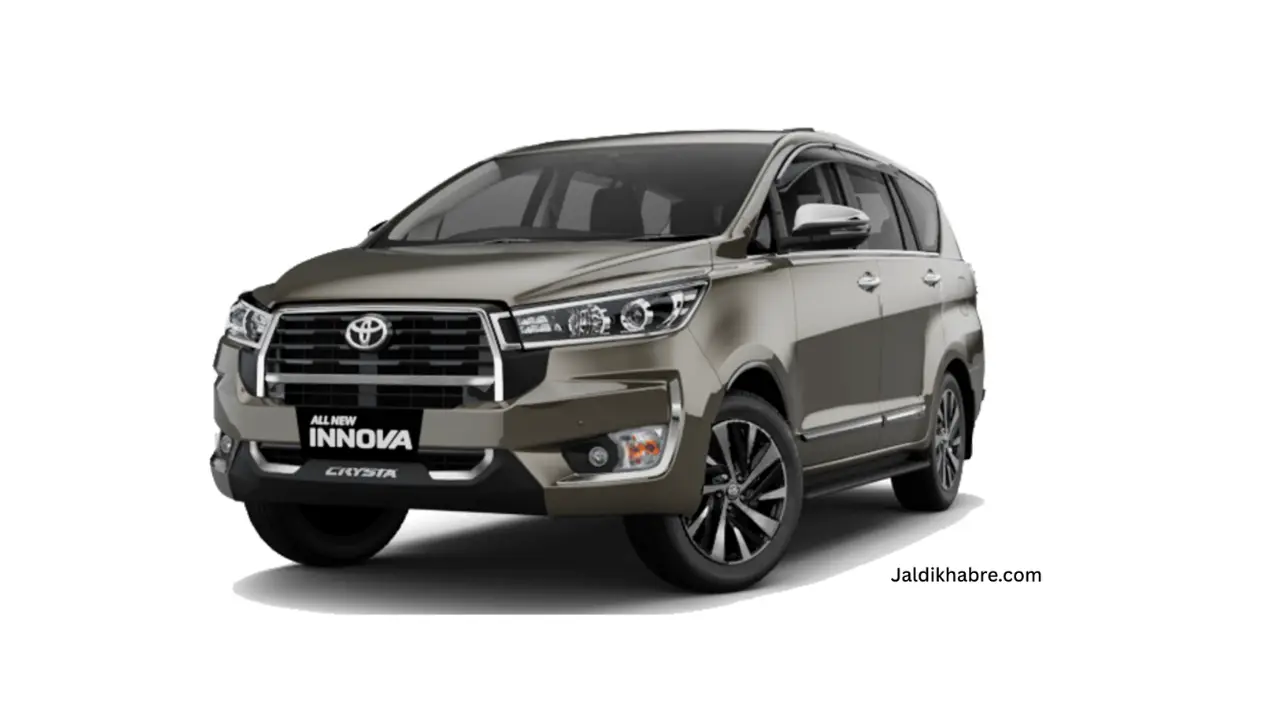
For more than a decade, one name has dominated India’s premium diesel MPV segment — the Toyota Innova Crysta.
From large joint families to intercity taxi fleets, from corporate travel operators to highway-loving private owners, the Crysta has built a reputation that very few vehicles in India can claim — unmatched reliability, strong resale value, and bulletproof diesel performance.
But now, something big is changing.
Multiple industry reports suggest that Toyota may discontinue the diesel Innova Crysta by March 2027. While Toyota Kirloskar Motor has not officially confirmed the news, regulatory timelines and company strategy are beginning to align in a way that makes the end seem increasingly likely.
Is this truly the end of a diesel legend?
Let’s break it down.
Why Toyota Innova Crysta Could Be Discontinued by 2027
The biggest reason isn’t poor sales.
It isn’t falling demand.
It isn’t competition.
It’s regulation.
CAFE 3 Norms: The Real Reason Behind the Exit
India’s upcoming CAFE 3 (Corporate Average Fuel Efficiency) norms will come into effect in April 2027. These norms significantly tighten fleet-wide CO₂ emission limits for automobile manufacturers.
In simple terms:
- Every car company must maintain an average emission level across all vehicles sold.
- Heavier diesel vehicles with large engines increase the fleet’s emission average.
- If the average exceeds limits, manufacturers face heavy penalties.
The Innova Crysta uses:
- A ladder-frame IMV platform
- A 2.4-litre diesel engine
- Higher kerb weight compared to monocoque MPVs
Under CAFE 3, vehicles like the Crysta become emission liabilities rather than volume contributors.
It becomes financially inefficient to continue selling them.
And that’s where the problem begins.
Toyota’s Shift to Hybrid: The Hycross Strategy
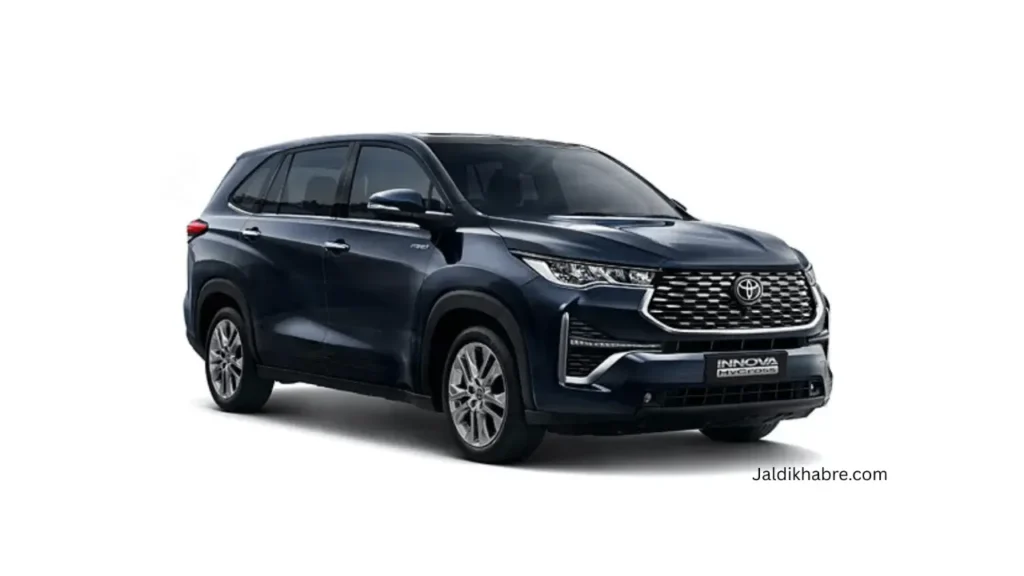
Toyota’s future direction is already visible through the Toyota Innova Hycross.
The Hycross is built on:
- TNGA-C monocoque platform
- Strong hybrid powertrain
- Petrol + electric combination
- Better fuel efficiency
Here’s the key difference:
Under CAFE rules, strong hybrids earn “super credits.” That means:
- One hybrid sale can count as two vehicles in emission calculations.
- This significantly reduces Toyota’s regulatory burden.
So while the Crysta increases fleet emissions, the Hycross reduces them.
From a business perspective, maintaining both side by side no longer makes strategic sense.
Still Strong in 2026: Why Demand Hasn’t Fallen
Ironically, the Innova Crysta may exit while still performing strongly.
Despite being an older platform, the Crysta continues to sell well in 2026.
Industry data suggests:
- It contributed nearly 39% of total Innova sales in Q1 FY2026.
- Fleet operators still prefer diesel manual transmission.
- Highway drivers still trust its long-distance durability.
Why buyers still love it:
- Proven 2.4L diesel engine
- Excellent torque for heavy loads
- Strong body-on-frame construction
- Long-term reliability
- High resale value
- Lower maintenance anxiety compared to hybrid systems
For taxi operators especially, the diesel manual formula remains unbeatable.
What Makes the Crysta Different from the Hycross?
Many people think the Hycross is just a modern replacement.
But that’s not entirely true.
Platform Difference
- Crysta: Ladder-frame chassis (rugged, load-friendly)
- Hycross: Monocoque chassis (more comfort-oriented)
Powertrain Difference
- Crysta: 2.4L diesel + 5-speed manual
- Hycross: Petrol + strong hybrid + CVT
Buyer Preference Split
Crysta buyers want:
- Durability
- Simplicity
- Diesel torque
- Manual control
Hycross buyers want:
- Fuel efficiency
- Modern features
- Silent city driving
- Automatic comfort
These are two different customer mindsets.
What Happens After Crysta Is Discontinued?
If Toyota officially phases out the Innova Crysta by 2027, India’s body-on-frame diesel MPV segment will shrink significantly.
Currently, there is no direct replacement offering:
- Diesel
- Ladder-frame chassis
- Toyota reliability
- Premium MPV comfort
Possible scenarios:
1. Toyota Focuses Only on Hybrid
Most likely scenario.
Toyota may make the Hycross the sole Innova offering, aligning fully with hybrid strategy.
2. Innova EV Concept
Toyota has previously showcased an electric concept inspired by the Crysta design language.
If regulations tighten further, an electric MPV could eventually fill the gap.
3. Competitor Entry
Reports suggest Hyundai may evaluate a localized version of the Staria.
However, no official confirmation exists yet.
Why Toyota Has Not Officially Announced It Yet
Car manufacturers rarely announce discontinuation 1–2 years in advance because:
- It impacts current sales
- Buyers delay purchases
- Dealer inventory gets stuck
Toyota is likely to:
- Continue production till 2027
- Possibly introduce minor 2026 cosmetic refresh
- Quietly phase out bookings before deadline
This would allow a smooth transition without damaging current demand.
Should You Buy the Innova Crysta in 2026?
This is the real question buyers are asking.
If you:
- Prefer diesel
- Drive long highway distances
- Need strong load capacity
- Want manual gearbox
- Plan to keep the vehicle 8–10 years
Then buying the Crysta in 2026 may still make sense.
Because once discontinued:
- Prices in used market may rise
- Demand could spike
- Waiting periods may increase in final production months
However, if you:
- Drive mostly in cities
- Want better fuel economy
- Prefer automatic
- Want latest tech features
Then the Hycross may suit you better.
Will Resale Value Increase After Discontinuation?
Historically, when strong Toyota diesel vehicles discontinue:
- Used market demand increases
- Prices remain stable
- Taxi operators continue buying pre-owned units
Given the Crysta’s reputation, resale value is unlikely to crash.
In fact, short-term demand may strengthen before final production ends.
Is Diesel Really Ending in India?
Not immediately.
But:
- Emission norms are tightening
- Fuel efficiency rules are becoming stricter
- Hybrid and EV incentives are increasing
Manufacturers are slowly moving away from large diesel engines in passenger vehicles.
The Innova Crysta may simply be one of the first big names to transition out.
A Quiet Goodbye, Not a Sudden Exit
If reports hold true, the Innova Crysta won’t disappear overnight.
It will likely:
- Continue selling through 2026
- Gradually reduce production in early 2027
- Exit before April 2027 CAFE 3 implementation
There will be no dramatic announcement.
Just a silent shift in availability.
The Emotional Factor: Why This Matters
For many Indian families, the Innova wasn’t just a car.
It was:
- The vehicle used for weddings
- The long road trip machine
- The trusted airport drop car
- The dependable business partner
Few vehicles achieve this kind of emotional connection.
And that’s why this potential discontinuation feels bigger than a normal product cycle update.
My Thoughts:
I love Toyota Innova Crysta a lot and also wish to buy this car. But as of now due to some financial issues I am unable to purchase it. But soon I will manage my finances and for this car to purchase it, otherwise I would loose it forever.
I also would like to suggest you that you should also purchase this car if you love it. Because once the car is being discontinued then you cannot do anything then their would be only option to buy the used Toyota Innova Crysta car and you cannot be the first owner. Before making your decision final take a Test-drive of Innova Crysta car. You can also take a bank loan by paying some downpayment as per your financials and cibil records. Before taking a loan seek an advice from your financer.
Final Verdict: End of an Era or Evolution?
The discontinuation of the Toyota Innova Crysta, if confirmed, will not be because it failed.
It will be because the industry changed.
Regulation changed.
Technology evolved.
And strategy demanded a shift.
Toyota’s focus on the Toyota Innova Hycross shows the company’s long-term direction is clear — hybrid dominance before full electrification.
For buyers who still prefer diesel durability, 2026 may be one of the last opportunities to own a brand-new Innova Crysta.
The countdown may not be loud.
But it has already begun.
Also Read: