The year 2025 turned out to be one of the most remarkable years in the history of Maruti Suzuki.
At a time when the global automotive industry was dealing with multiple challenges — rising raw material costs, economic uncertainty, and the transition toward electric vehicles — India’s largest car manufacturer managed to deliver something extraordinary.
Instead of slowing down, Maruti Suzuki 2025 sales accelerated its momentum.
By the end of calendar year 2025, the company had achieved its highest-ever annual sales, setting a new benchmark for the Indian automotive market.
What makes this achievement even more impressive is that it happened during a period when competition was intensifying across almost every vehicle segment.
While many automakers struggled to maintain growth, Maruti Suzuki strengthened its dominance in the Indian car market.
But the story behind this success is more complex than just record numbers.
Behind the impressive sales figures lies a carefully executed strategy that combines strong domestic demand, expanding exports, diversified product segments, and long-term future planning.
Let’s explore how Maruti Suzuki achieved its historic 2025 performance.
Maruti Suzuki’s Record-Breaking Sales in 2025
According to the company’s official data, Maruti Suzuki closed calendar year 2025 with total sales of 2,351,139 units, marking the highest annual sales figure in its history.
This milestone highlights the massive scale at which the company operates in India and globally.
Key Highlights of Maruti Suzuki 2025 Sales
Total Sales:
2,351,139 units (all-time record)
Domestic Sales:
1,955,491 units (highest ever)
Exports:
395,648 units
Retail Sales:
1,871,508 units
In an automotive industry where even 5–7% growth is considered strong, Maruti Suzuki’s ability to achieve record-breaking volumes demonstrates the strength of its brand and distribution network.
The company’s success also reflects the continued demand for affordable, fuel-efficient, and practical vehicles, which remain highly attractive for Indian consumers.
December 2025: A Historic Month for Maruti Suzuki
Just when analysts expected the year to slow down toward the end, December 2025 delivered one of the most surprising results in Maruti Suzuki’s history.
The company recorded its highest-ever monthly dispatch, marking the strongest December performance in more than four decades.
December 2025 Sales Performance
Total Sales:
217,854 units
Year-on-Year Growth:
+22.3%
Domestic Wholesale:
182,165 units
These numbers exceeded market expectations and reinforced Maruti Suzuki’s leadership in India’s automotive sector.
Another interesting statistic from December was dealer inventory levels, which dropped to extremely low levels.
Dealers reportedly had only about three days of stock available.
Low inventory usually indicates strong demand, as vehicles are being sold faster than dealerships can replenish them.
This situation suggests that consumer demand for Maruti vehicles remained extremely strong during the final months of 2025.
The Secret Behind Maruti Suzuki’s Massive Volume Advantage
One of the biggest reasons behind Maruti Suzuki’s dominance is its ability to perform well across multiple vehicle segments simultaneously.
Unlike many competitors that depend heavily on a few popular models, Maruti Suzuki sells large volumes across several categories.
This diversified portfolio provides a significant advantage.
Segment-Wise December 2025 Sales Performance
One of the biggest strengths of Maruti Suzuki is its ability to generate strong sales across multiple vehicle segments. Unlike many competitors that depend heavily on a few popular models, Maruti sells cars in almost every category — from entry-level hatchbacks to SUVs and commercial vehicles.
The December 2025 sales data clearly shows how diversified the company’s portfolio has become.
| Segment | December 2025 Sales | Popular Models |
|---|---|---|
| Mini & Compact | 92,929 units | Alto, Swift, Baleno, Wagon R, Dzire |
| Utility Vehicles | 73,818 units | Brezza, Fronx, Grand Vitara, Ertiga, Jimny |
| Vans | 11,899 units | Eeco |
| Light Commercial Vehicles | 3,519 units | Super Carry |
This table highlights how Maruti Suzuki’s sales strength comes from volume across segments rather than dependence on a single blockbuster model.
For example, the Mini & Compact segment alone contributed more than 92,000 units in December, showing that affordable hatchbacks and compact sedans still remain extremely popular among Indian buyers.
At the same time, the Utility Vehicle segment crossed 73,000 units, proving that Maruti has successfully strengthened its presence in the fast-growing SUV market.
This balanced portfolio allows Maruti Suzuki to remain resilient even when demand shifts between different vehicle segments.
Segment-wise Sales Strength
Mini & Compact Segment
This segment remains the backbone of Maruti Suzuki’s domestic sales.
Key models include:
- Alto
- Swift
- Baleno
- Wagon R
- Dzire
Together, these models generated over 92,000 sales in December alone, proving the continued popularity of affordable hatchbacks and compact sedans.
Utility Vehicles (SUVs and MPVs)
The utility vehicle segment has become one of the fastest-growing categories in India.
Maruti Suzuki has expanded its presence here with several successful models, including:
- Brezza
- Fronx
- Grand Vitara
- Ertiga
- Jimny
These vehicles collectively sold over 73,000 units in December 2025, showing that Maruti is now strongly positioned in the SUV market as well.
Vans and Commercial Vehicles
Maruti Suzuki also continues to dominate segments that many competitors ignore.
The Maruti Suzuki Eeco remains one of India’s most popular multi-purpose vans, widely used by families, businesses, and commercial operators.
Meanwhile, the Maruti Suzuki Super Carry continues to serve small business owners and logistics operators.
While these vehicles may not attract headlines, they contribute significantly to the company’s overall sales volume.
Global Success: Maruti Suzuki’s Growing Export Power
Another major contributor to Maruti Suzuki’s 2025 success was its strong export performance.
The company exported 395,648 vehicles during the year, representing 21% year-on-year growth.
This achievement reinforces Maruti Suzuki’s position as India’s largest passenger vehicle exporter.
Vehicles manufactured in India are now shipped to more than 100 countries worldwide.
Major export destinations include:
- Latin America
- Africa
- Middle East
- Southeast Asia
- Europe
Expanding exports helps Maruti Suzuki reduce its dependence on domestic demand while increasing global market presence.
Electric Vehicles: Maruti’s Strategic Entry
For several years, critics have argued that Maruti Suzuki was slow to enter the electric vehicle segment.
However, the company appears to be taking a more calculated approach.
Instead of rushing into the EV market, Maruti Suzuki is focusing on developing competitive products before scaling production.
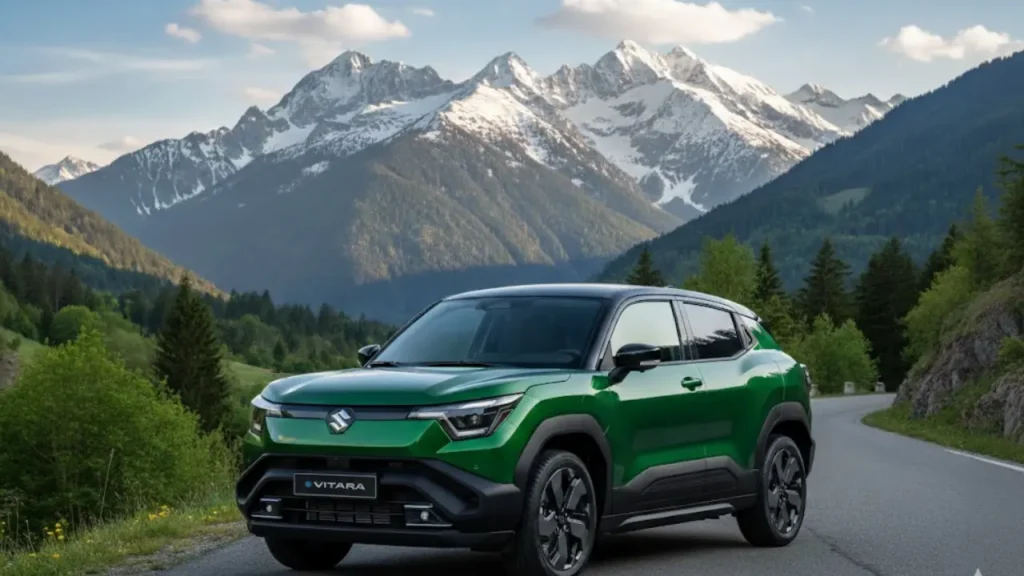
One of the most significant steps in this direction was the export introduction of the Suzuki e‑Vitara.
In its first year, the company exported over 13,000 electric vehicles to 29 countries, mainly in Europe.
This move signals the beginning of Maruti Suzuki’s broader electric mobility strategy.
By entering the EV market gradually but strategically, the company hopes to balance profitability with long-term sustainability.
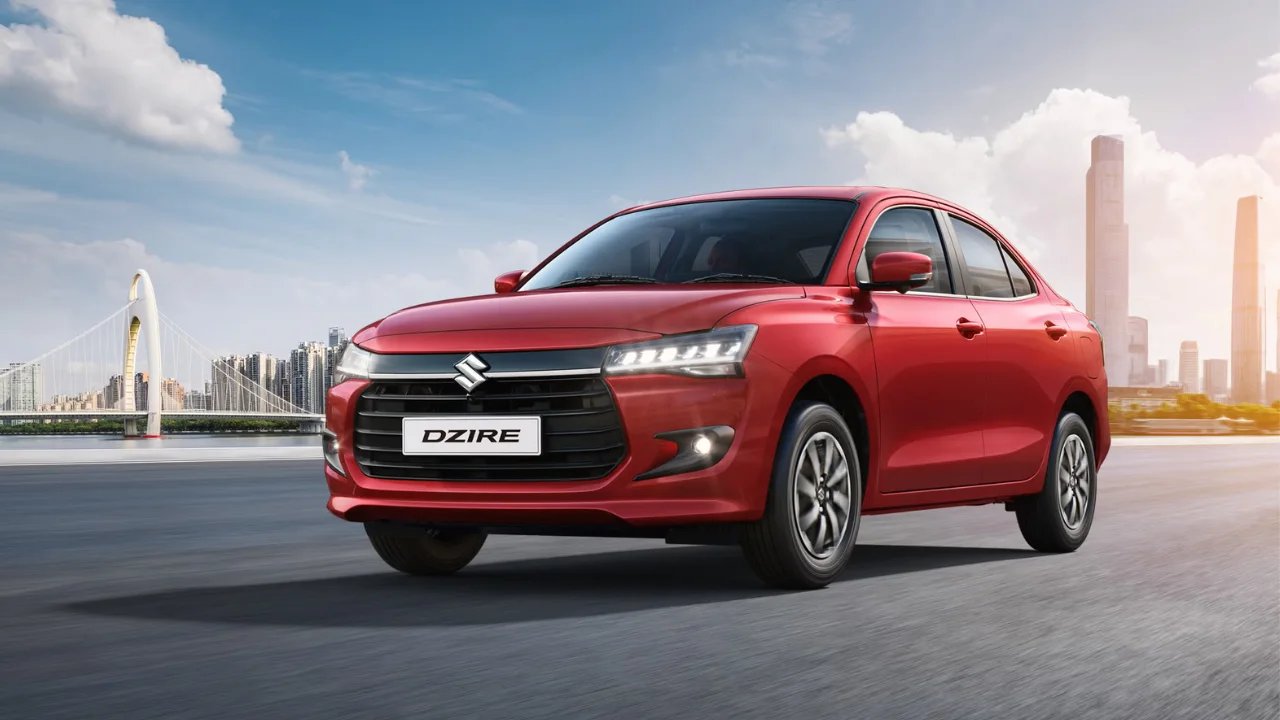
The Quiet Champion of 2025: Dzire
Among all Maruti models, one car stood out as the biggest success story of 2025.
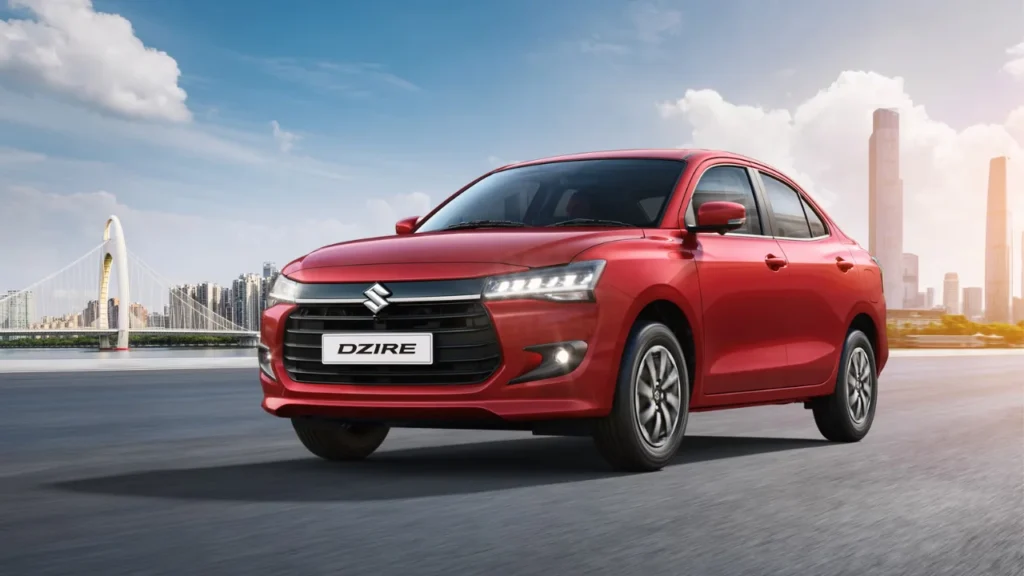
The Dzire emerged as India’s best-selling car for the calendar year.
The Dzire achieved approximately 214,000 units in sales, outperforming several popular SUVs.
This achievement is remarkable because the Indian automotive market has increasingly shifted toward SUVs.
Despite this trend, the Dzire maintained strong demand thanks to:
- Excellent fuel efficiency
- Affordable pricing
- Comfortable cabin space
- Strong reliability reputation
The Dzire’s popularity among both private buyers and fleet operators helped it maintain consistent sales throughout the year.
The Strategy Behind the Success: Maruti 3.0
Maruti’s record-breaking performance is not just the result of strong products.
It is part of a broader long-term strategy known as “Maruti 3.0.”
This strategy focuses on preparing the company for the next phase of automotive transformation.
Key goals of the Maruti 3.0 strategy include:
1. Expanding Manufacturing Capacity
The company aims to increase production capacity to four million vehicles annually by 2030.
This will allow Maruti Suzuki to meet growing domestic and global demand.
2. Strengthening Rural and Tier-2 Markets
A large portion of India’s future car demand is expected to come from smaller cities and rural areas.
Maruti Suzuki already has one of the strongest rural sales networks in the country, giving it a major advantage in these markets.
3. Multi-Powertrain Strategy
Instead of focusing on a single technology, Maruti Suzuki is investing in multiple powertrain options, including:
- Petrol engines
- CNG vehicles
- Hybrid technology
- Electric vehicles
This approach allows the company to adapt to changing consumer preferences and government policies.
Why Rivals Are Paying Close Attention
Maruti’s success has significant implications for the entire Indian automotive industry.
When one company consistently delivers record-breaking sales, competitors must work harder to maintain their market share.
Major rivals include:
- Hyundai Motor India
- Tata Motors
- Mahindra & Mahindra
These manufacturers are expanding their SUV and electric vehicle portfolios to challenge Maruti’s leadership.
However, Maruti’s vast distribution network, competitive pricing, and brand trust make it extremely difficult to challenge its dominance.
What 2025 Means for the Future
Maruti Suzuki’s record-breaking year raises an important question:
Was 2025 simply a peak year, or the beginning of an even bigger growth phase?
If the company successfully executes its expansion plans and EV strategy, the coming decade could see Maruti Suzuki become even more dominant in both domestic and international markets.
However, the industry is also changing rapidly.
Electric mobility, stricter emission regulations, and evolving consumer preferences will shape the future of the automotive market.
Maruti Suzuki’s ability to adapt to these changes will determine whether it continues to lead the industry.
Final Thoughts
The 2025 sales record achieved by Maruti Suzuki is more than just an impressive number.
It represents a combination of strong product strategy, efficient distribution, export growth, and long-term planning.
By achieving over 2.35 million annual sales, the company has reinforced its position as the dominant force in the Indian automotive market.
But perhaps the most important takeaway from 2025 is this:
Maruti Suzuki is not just responding to market trends — it is actively shaping them.
As the automotive industry enters a new era of electrification and technological transformation, the company’s next moves will be closely watched by both competitors and consumers. Watch short Video of Maruti Suzuki Brand.
Also Read: