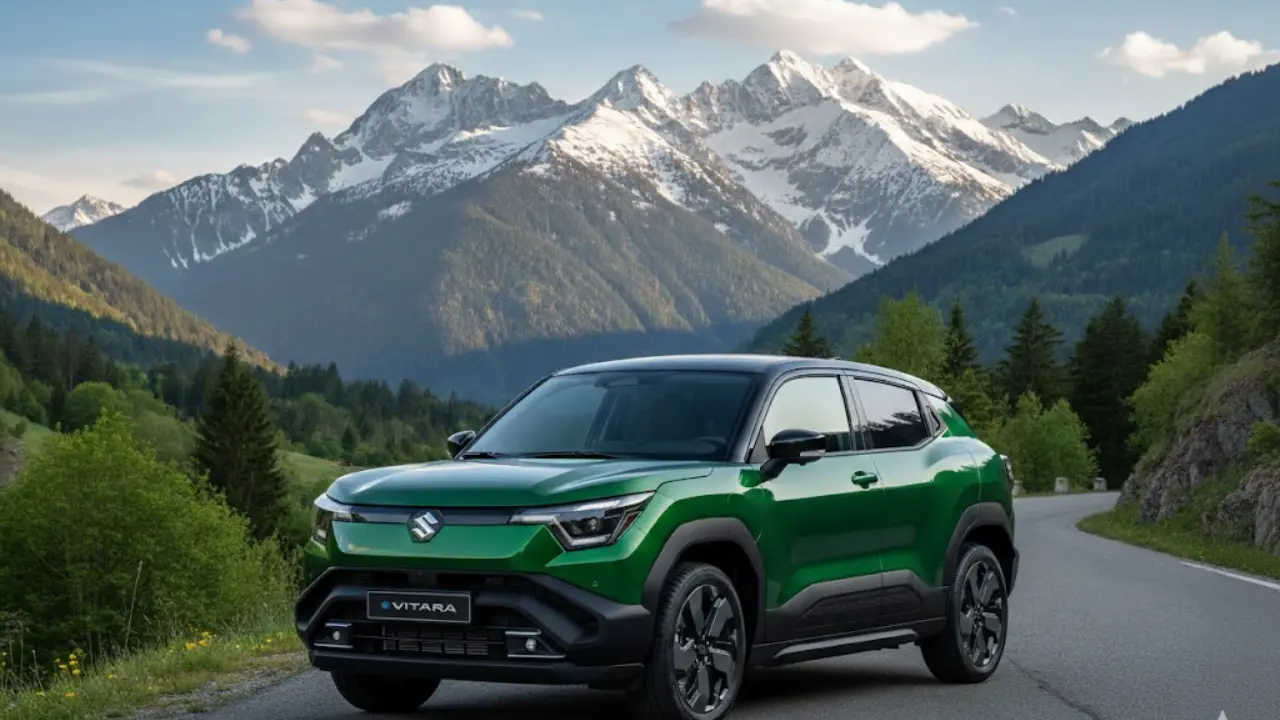
In a country where electric vehicle adoption is accelerating but still cautious, Maruti Suzuki’s arrival into the EV landscape with the e Vitara is nothing short of a watershed moment. Expected to launch in January 2026 with a projected price range of ₹17 lakh to ₹22.50 lakh (ex-showroom), the Maruti Suzuki e Vitara has all the ingredients to become India’s next mainstream electric SUV.
Bookings are already open via Nexa dealerships and online, and early buzz suggests this car could change how Indians perceive electric mobility — not as a compromise but as a choice as rewarding as owning a petrol or diesel SUV.
But with segment rivals like the Tata Nexon EV, MG ZS EV, and the upcoming Hyundai Creta Electric, can the e Vitara truly win hearts? Let’s take an in-depth, human-friendly look at what makes this EV special, and where it might just take the lead in 2026.
Maruti Suzuki E Vitara Battery, Range & Real-World Performance
One of the most important questions EV buyers ask first is: “How far can I go?”
The Maruti Suzuki e Vitara comes with two battery options, thoughtfully designed to suit different lifestyles and usage patterns.
Battery Options
- 49 kWh battery pack
- 61.1 kWh battery pack
Rather than a one-size-fits-all approach, Maruti Suzuki gives buyers flexibility — something Indian EV buyers have been demanding for years.
Range Breakdown
- ARAI claimed range: Up to 543 km (with the larger 61.1 kWh battery)
- Real-world range estimates:
- ~350 km with 49 kWh
- ~420 km with 61.1 kWh
This puts the e Vitara in a very respectable bracket, especially compared to rivals that either sacrifice range for price or demand expensive fast charging too soon. A claimed real-world range of over 400 km on the larger battery makes this a SUV you can comfortably drive across cities and beyond on a single charge.
Power Output
- 142 bhp (49 kWh version)
- 172 bhp (61.1 kWh version)
These numbers aren’t just impressive on paper — they signal that the e Vitara won’t feel underpowered even when fully loaded with passengers and luggage.
Drivetrain
- Front-Wheel Drive (FWD) in India
- AWD remains a possibility in global markets
FWD is a thoughtful decision for Indian conditions, balancing efficiency, simplicity, and lower ownership costs.
How the e Vitara Feels to Drive: Comfort Over Hype
While numbers and figures make headlines, the real magic of an EV lies in how it makes you feel behind the wheel.
Day-to-day driving in the Maruti Suzuki e Vitara is expected to feel:
- Smooth and silent — typical EV refinement
- Linear acceleration — no turbo lag
- Effortless city driving — ideal for stop-start traffic
- Comfortable cruising — no strain on highways
Electric motors are inherently responsive, and with a torquey setup, the e Vitara should feel quick off the line — especially in urban environments.
Unlike some sport-oriented EVs, this SUV seems tuned more for gentle confidence than racetrack thrills — exactly what most Indian SUV buyers want.
E Vitara Interior & Cabin Experience: Premium Yet Practical
One of the biggest evolutions in modern SUVs is how interiors have transformed — and the e Vitara isn’t shy of that evolution.
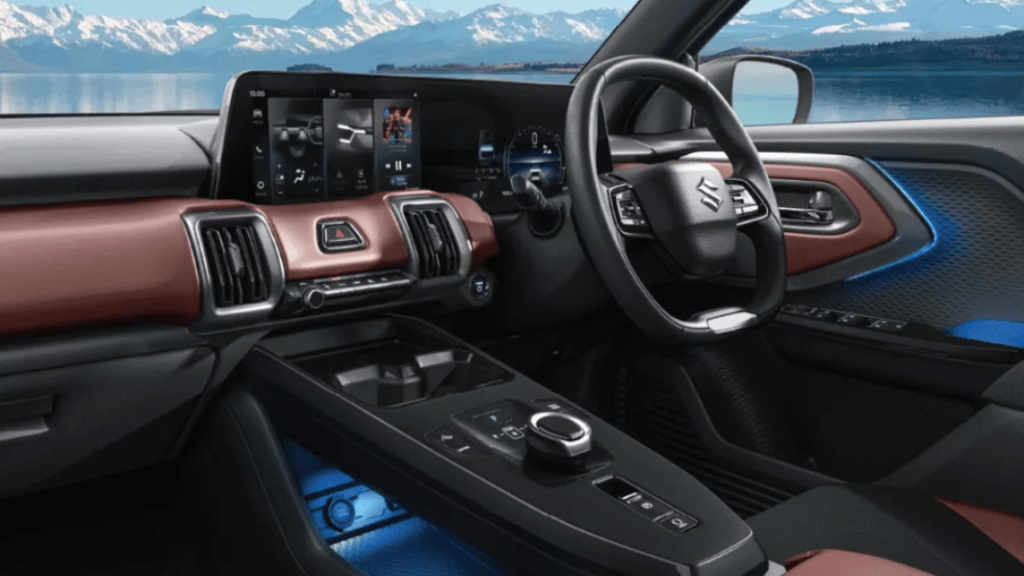
Cabin Design
The cabin has a stylish black and tan brown dual-tone theme that feels premium yet practical, steering well clear of overly plain or garish designs.
Tech & Screens
- 10.25-inch touchscreen infotainment
- Wireless Apple CarPlay
- Wireless Android Auto
- 10.25-inch digital driver display
This dual-screen setup brings a sense of connected living space inside the cabin, not just a driving cockpit. It’s easy to read, responsive, and feels modern without being overwhelming.
Ventilated Seats
Ventilated front seats are increasingly essential in India’s hot climate — and e Vitara delivers. Combine this with thoughtful ergonomics, and even long rides feel relaxed rather than exhausting.
Glass Roof
Instead of a conventional sunroof, Maruti has opted for a fixed glass roof. While it doesn’t open, it floods the cabin with natural light, making the interior feel larger and brighter — a subtle design choice that pays off.
Rear Seat Flexibility
The rear seats aren’t just about sitting — they are about living:
- 40:20:40 split configuration
- Slide and recline functionality
- More legroom and ventilation for passengers
These practical touches show a deeper understanding of family needs rather than just ticking feature boxes.
E Vitara Features: Balanced, Not Overdone
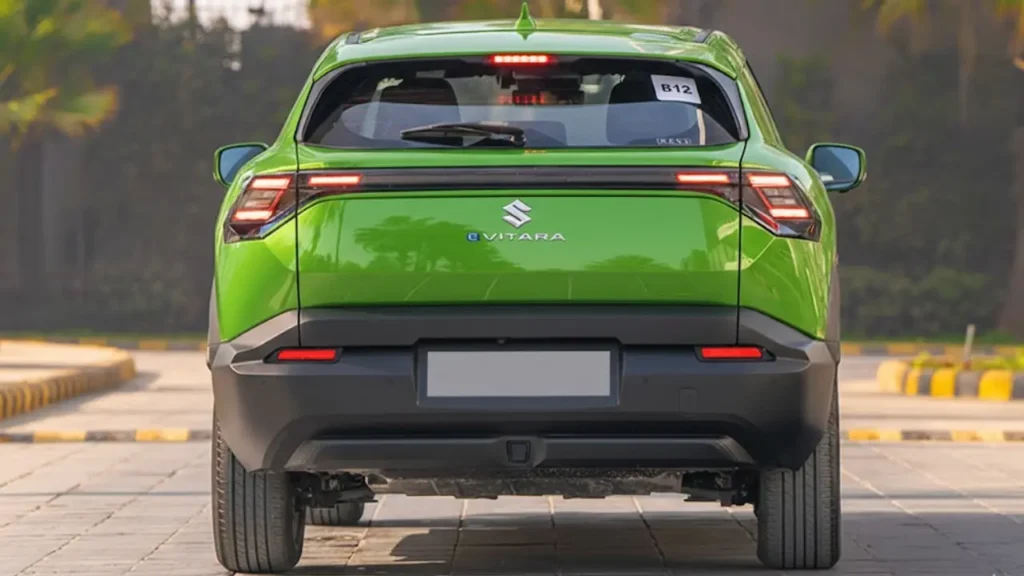
Maruti Suzuki has taken a smart approach with features — only including what’s genuinely useful and usable.
Noteworthy Inclusions
- Ventilated front seats
- Wireless smartphone integration
- Modern infotainment system
- Practical ergonomics
- Well-placed storage spaces
Unlike some rivals, the e Vitara doesn’t overload with gimmicky functionalities that drivers never use. Instead, it keeps the experience clean, simple, and intuitive — exactly what its potential buyers want.
E Vitara Safety & ADAS: India’s Most Trusted 5-Star Electric SUV?
Safety has been a strength for newer Maruti models, and the e Vitara steps into 2026 with confidence.
Standard Safety Kit
- 7 airbags
- ABS with EBD
- Electronic Stability Control (ESC)
- ISOFIX child seat mounts
These features served ICE cars well — and they serve EVs even better, making the vehicle feel secure and protected at highway speeds.
5-Star Bharat NCAP Rating
The e Vitara’s 5-star rating from Bharat NCAP is a significant trust builder, especially for Indian families who value safety above all.
Level-2 ADAS
The e Vitara also gets Level-2 Advanced Driver Assistance Systems, including:
- Adaptive cruise control
- Lane Keep Assist
- Autonomous Emergency Braking
- Forward Collision Warning
This advanced safety suite not only keeps you safe — it also reduces driver stress on long drives.
Charging: Real-World Convenience That Matters
Charging infrastructure can make or break an EV ownership experience — and Maruti seems to be solving this problem with planning.
Charging Times
- AC home charging:
- 7 kW: ~9 hours
- 11 kW: ~4.5 hours
- DC fast charging:
- 10% to 80% in ~45 minutes
These numbers mean you can recharge overnight at home or quickly on road trips — the kind of flexibility Indian buyers actually need.
Charging Network Expansion
Maruti Suzuki is actively working to build EV charging points at Nexa dealerships nationwide, which could be a huge confidence booster for first-time EV buyers.
Size, Practicality & Everyday Usability
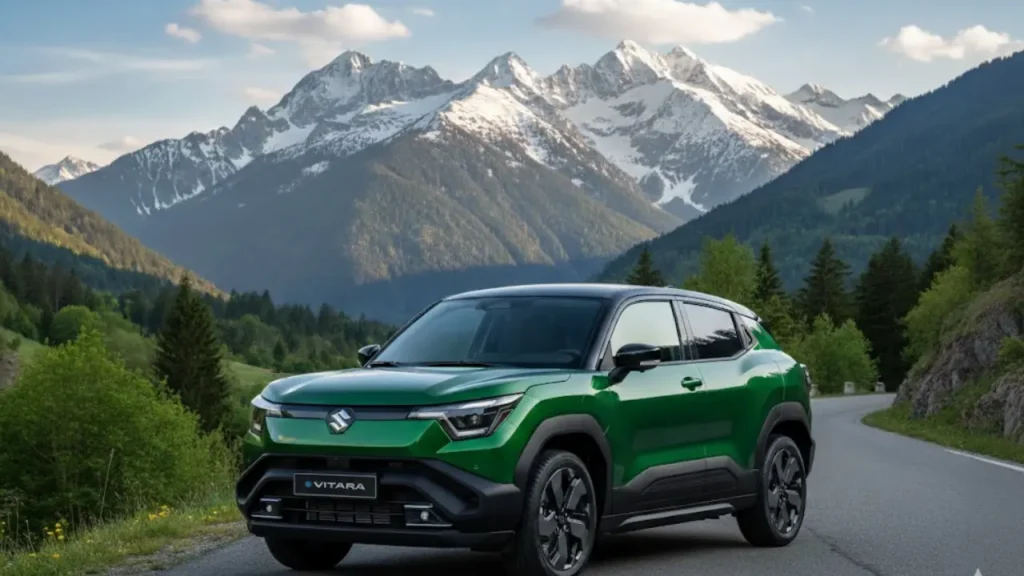
With dimensions of:
- Length: 4275 mm
- Width: 1800 mm
- Height: 1640 mm
- Seating: 5 occupants
The e Vitara fits the sweet spot for family vehicles — big enough for comfort, yet compact enough for city traffic and parking.
It’s roomy, well-balanced, and doesn’t compromise passenger space for battery packs — a crucial factor that many EVs overlook.
Expected Price & Segment Positioning
The expected ex-showroom price of ₹17–22.50 lakh places the e Vitara in a competitive space:
- Above entry-level EVs
- Below luxury EVs
- Right against segment stalwarts
Key Rivals
- Tata Nexon EV
- MG ZS EV
- Hyundai Creta Electric (expected)
Priced correctly, the e Vitara could be the best value proposition among these choices, balancing performance, safety, comfort, and features.
Final Verdict: Can the Maruti Suzuki e Vitara Win the EV Game in 2026?
The short answer: Yes — it has every chance of doing so.
But this isn’t just because Maruti Suzuki is India’s most trusted brand.
It’s because the e Vitara feels truly designed for the Indian context — not imported and adapted, but built with local realities in mind.
Here’s why the e Vitara could become India’s most loved electric SUV in 2026:
- Competitive pricing
- Strong real-world range figures
- Practical interior and flexible seating
- Terrific safety with Level-2 ADAS
- Thoughtful feature set
- Reliable charging support from Nexa network
It may not be the sportiest EV, and it may not have AWD for now — but most Indian buyers won’t miss that. Instead, they’ll enjoy a safe, comfortable, reliable, everyday EV that feels like it was built for them.
For families, city commuters, and anyone who values peace of mind on the road, the Maruti Suzuki e Vitara SUV could well become the benchmark of the Indian EV era.
Book your Maruti Suzuki e Vitara SUV now.
Also Read: