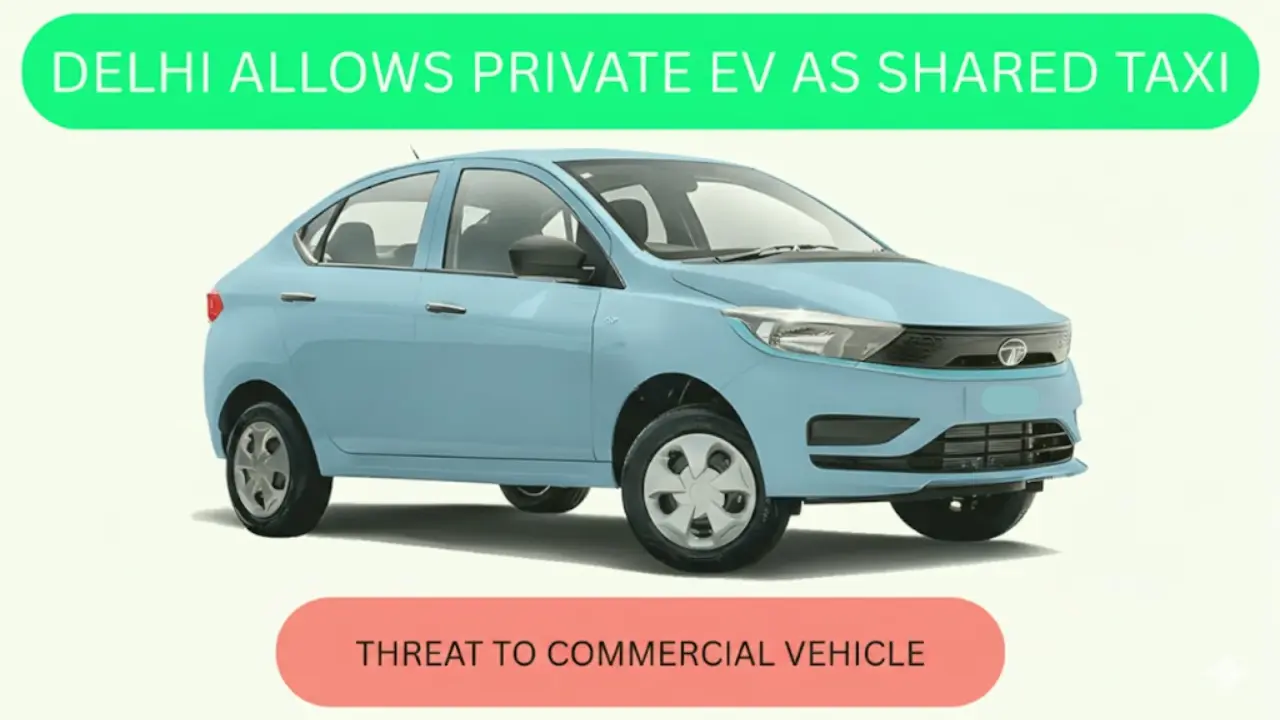
In a move that could fundamentally reshape how India’s capital moves, the Government of Delhi has granted in-principle approval to allow privately owned electric vehicles (EVs) and BS-VI compliant cars to operate as shared taxis [ Private EV as Shared Taxi ]
If formally notified, this reform will blur the traditional boundary between private and commercial vehicles — potentially transforming urban transport economics, reducing congestion, and accelerating EV adoption.
This isn’t just another transport rule update.
It could become one of the most disruptive mobility reforms Delhi has seen in years.
Let’s break down what has changed, why it matters, and what it means for commuters, vehicle owners, aggregators, and the future of Indian cities.
What Exactly Has the Delhi Government Approved?
In January 2026, under the leadership of Chief Minister Rekha Gupta, the Delhi government approved a proposal that allows:
- White-plate private EVs
- BS-VI compliant private cars
To operate legally as shared taxis via registered ride-hailing platforms — once formal amendments to transport rules are notified.
Until now, only commercial (yellow plate) vehicles were permitted to operate as taxis in Delhi.
This new policy opens the door for personal vehicle owners to legally participate in shared mobility — but with regulatory oversight.
The official notification and operational guidelines are expected to follow soon.
Why Is Delhi Making This Move Now?
Delhi faces three major transport challenges:
- Severe air pollution
- Traffic congestion
- Underutilised private vehicles
Most private cars in Delhi:
- Remain parked for nearly 90% of the day
- Carry only 1–2 passengers per trip
- Contribute significantly to congestion
Instead of banning vehicles or introducing harsh restrictions, the government is taking a structural approach:
Encourage higher occupancy in existing vehicles.
The goal is simple:
Fewer cars on the road carrying more people.
How This Changes the Ride-Hailing Landscape
Major aggregators such as:
- Ola
- Uber
- Rapido
Have reportedly committed to launching shared taxi services within one month of policy notification.
This signals strong industry alignment with the government’s clean-mobility vision.
Under the new framework:
- Private EV owners can register on platforms.
- Shared rides (carpool-style trips) will be encouraged.
- Aggregators must ensure compliance with safety and environmental standards.
This could dramatically expand the number of available shared vehicles in the city.
The Big Idea: Shared Mobility Over Private Ownership
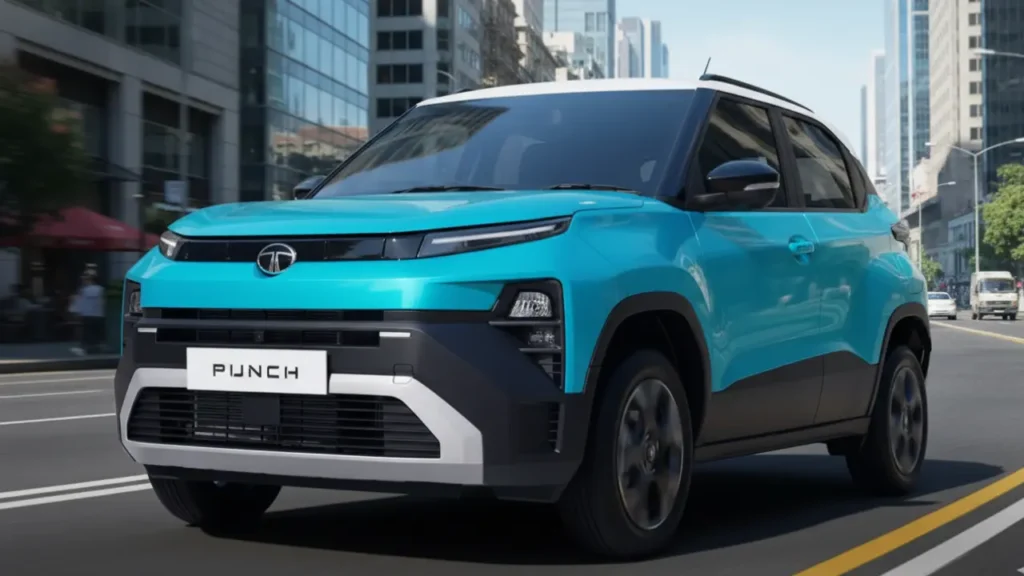
The policy is not about replacing traditional taxis.
It’s about increasing vehicle utilisation.
Think about it:
If five people use one shared EV instead of five separate private cars:
- Road congestion reduces
- Emissions drop
- Fuel consumption declines
- Parking pressure eases
Delhi is essentially attempting to:
Shift from ownership-based mobility to usage-based mobility.
This aligns with global urban transport trends.
Focus on Women Safety and Inclusion
One important pillar of the policy is safety.
Aggregators have pledged to:
- Introduce women-driven cab services
- Strengthen background verification
- Improve digital safety tracking
- Provide emergency support mechanisms
This approach serves dual objectives:
- Improve passenger confidence
- Create employment opportunities for women
By integrating safety as a core component rather than an afterthought, the policy strengthens its social acceptance.
Charging Infrastructure Expansion Plan
Allowing more EVs to operate commercially requires robust infrastructure.
The Delhi government has reportedly offered:
- Allocation of land for EV charging stations
- Encouragement for solar-powered charging infrastructure
- Fast-charging corridor development
Charging availability is crucial for:
- Driver earnings
- Ride acceptance rates
- Range confidence
Without strong infrastructure support, the shared EV model cannot scale.
Environmental Safeguards: Battery Waste Responsibility
A major concern in EV adoption is battery disposal.
Under the proposed framework:
Aggregators will bear responsibility for:
- Proper battery recycling
- Safe disposal systems
- Compliance with environmental norms
This ensures that the transition to electric mobility does not create secondary environmental hazards.
What This Means for Private Car Owners
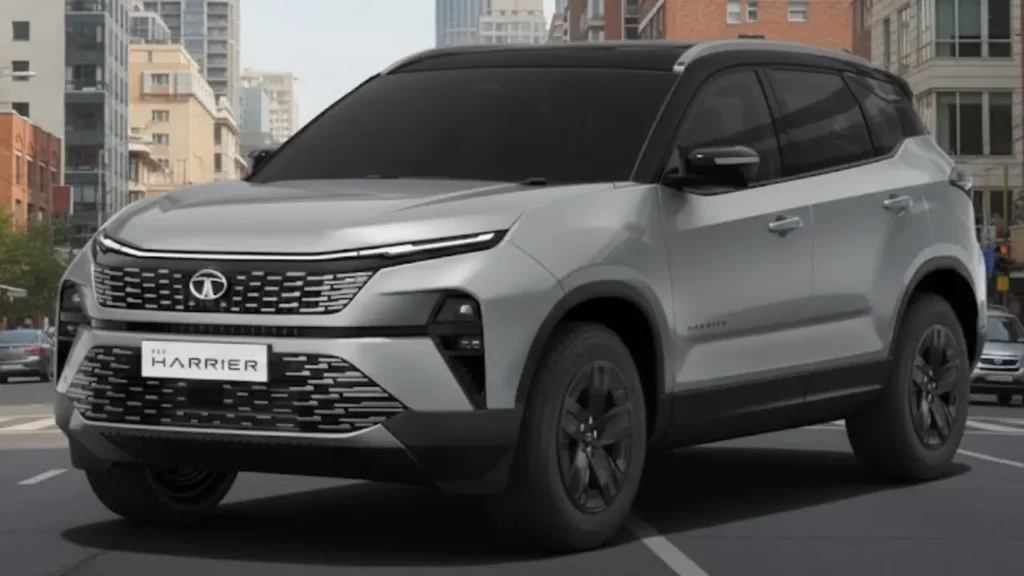
For private EV owners in Delhi, this policy could unlock:
- Additional income opportunities
- Better return on vehicle investment
- Reduced idle time
Instead of sitting unused, a private EV can now generate earnings during free hours.
However, operational guidelines will likely include:
- Platform registration requirements
- Insurance upgrades
- Safety compliance
- Possibly tax or permit modifications
Details will become clearer after formal notification.
Impact on Traditional Taxi Drivers
This is where debate intensifies.
Existing commercial taxi drivers may worry about:
- Increased competition
- Fare pressure
- Reduced trip volumes
However, the policy emphasizes shared rides — not unlimited taxi expansion.
If implemented properly, it could:
- Increase overall mobility demand
- Reduce single-occupancy trips
- Expand total ride volume
The net impact will depend on regulation clarity.
Shuttle Services and Ring Road Experiments

Beyond private EV taxis, the Delhi government has proposed:
- Shuttle services along Ring Road
- Airport corridor mobility programs
- High-density route shared fleets
These measures aim to:
- Reduce peak-hour congestion
- Improve connectivity
- Complement metro and bus networks
If successful, this could create a hybrid public-private mobility ecosystem.
Integration of E-Rickshaws Into Digital Platforms
Another major proposal involves integrating e-rickshaws into ride-hailing apps.
Currently, much of Delhi’s e-rickshaw sector operates informally.
By formalizing integration:
- Last-mile connectivity improves
- Pricing becomes transparent
- Safety standards improve
- Driver earnings stabilize
This could modernize one of Delhi’s largest informal mobility sectors.
Will This Reduce Pollution?
Delhi’s air quality remains among the worst in India during peak winter months.
If the policy achieves:
- Higher shared occupancy
- Faster EV adoption
- Reduced diesel vehicle reliance
It could meaningfully lower transport-related emissions.
However, success depends on:
- Enforcement
- Pricing strategy
- Public adoption
- Infrastructure readiness
Policy alone is not enough — execution is everything.
Economic Impact on the Mobility Sector
This reform could:
- Expand gig economy participation
- Increase EV sales
- Boost charging infrastructure investment
- Encourage clean-tech startups
Delhi could become a model city for shared electric mobility.
If replicated across major Indian metros, this framework could reshape urban transport nationally.
Challenges the Policy Must Overcome
While promising, the plan faces key risks:
1. Regulatory Complexity
Transport rules must be clearly defined to avoid confusion.
2. Fare Structure
If shared rides are not significantly cheaper, commuters won’t shift.
3. Infrastructure Gaps
Charging bottlenecks could discourage drivers.
4. Political Pushback
Traditional taxi unions may resist.
5. Public Adoption
Behavioral change takes time.
The reform’s success hinges on careful implementation.
Could Other Cities Follow Delhi?
If Delhi’s shared private EV model succeeds, cities like:
- Mumbai
- Bengaluru
- Hyderabad
- Pune
May evaluate similar policies.
Urban congestion is a nationwide issue.
Delhi’s experiment could become India’s mobility blueprint.
My Thoughts on Private EV as Shared Taxi:
This a great decision made by government bodies in Delhi which will create a impact on reducing the air pollution with the full usage of the vehicle. Also it is beneficial to the private owner in such way that they can travel through the city where they wish to go along with the customer and can also earn through it.
Final Verdict: Structural Reform or Short-Term Experiment?
Allowing private EV as shared taxis is not a cosmetic change.
It challenges the very definition of private vs commercial vehicles.
If implemented effectively, this policy could:
- Increase vehicle utilisation
- Reduce congestion
- Accelerate EV adoption
- Improve last-mile connectivity
- Expand gig economy participation
But if poorly executed, it risks:
- Market chaos
- Fare instability
- Regulatory confusion
Delhi is taking a calculated risk.
Whether it becomes a model for India or a temporary experiment will depend entirely on execution in 2026.
One thing is certain:
- Urban mobility in Delhi will not look the same if this policy fully takes effect.
Also Read: